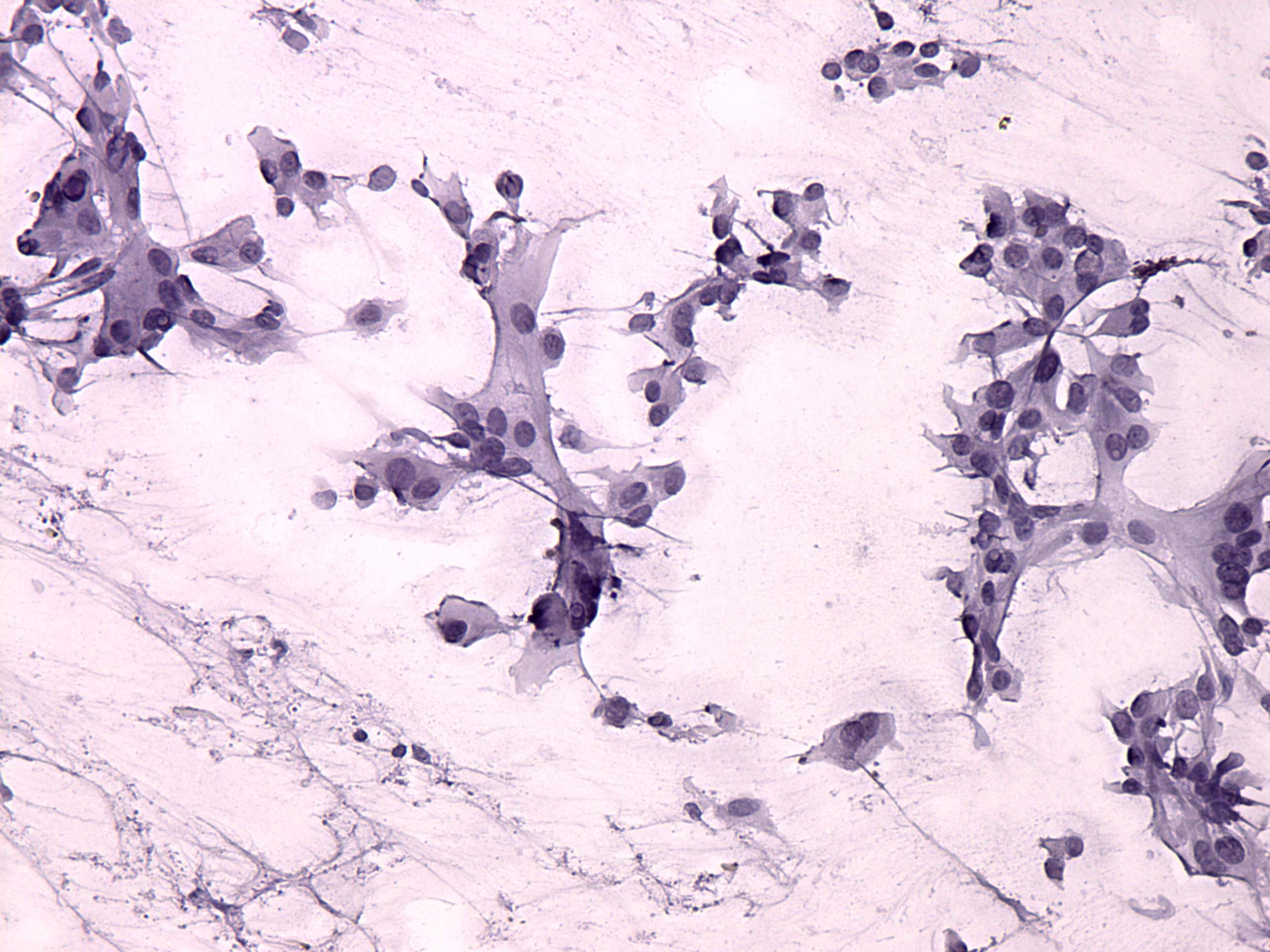
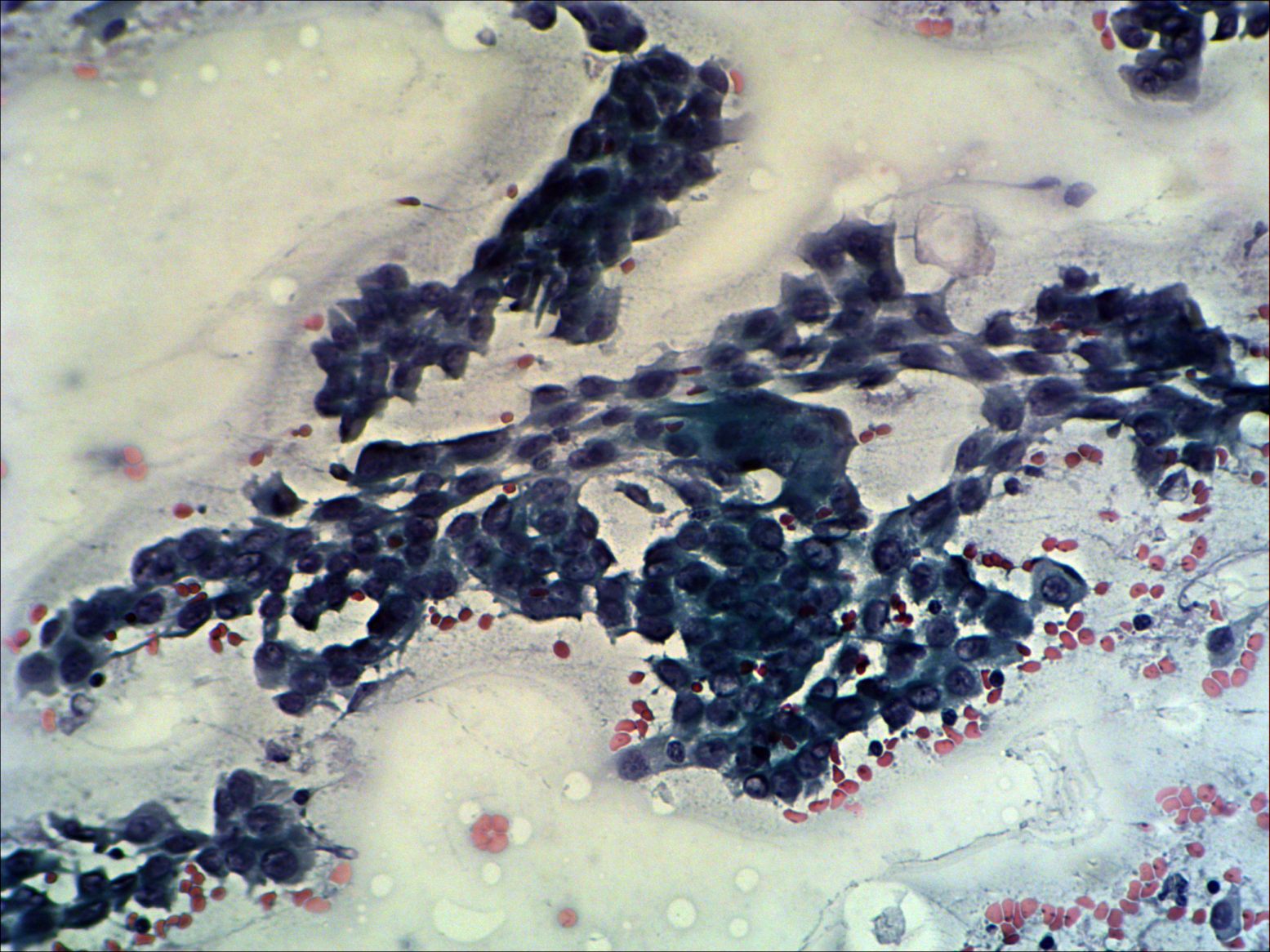
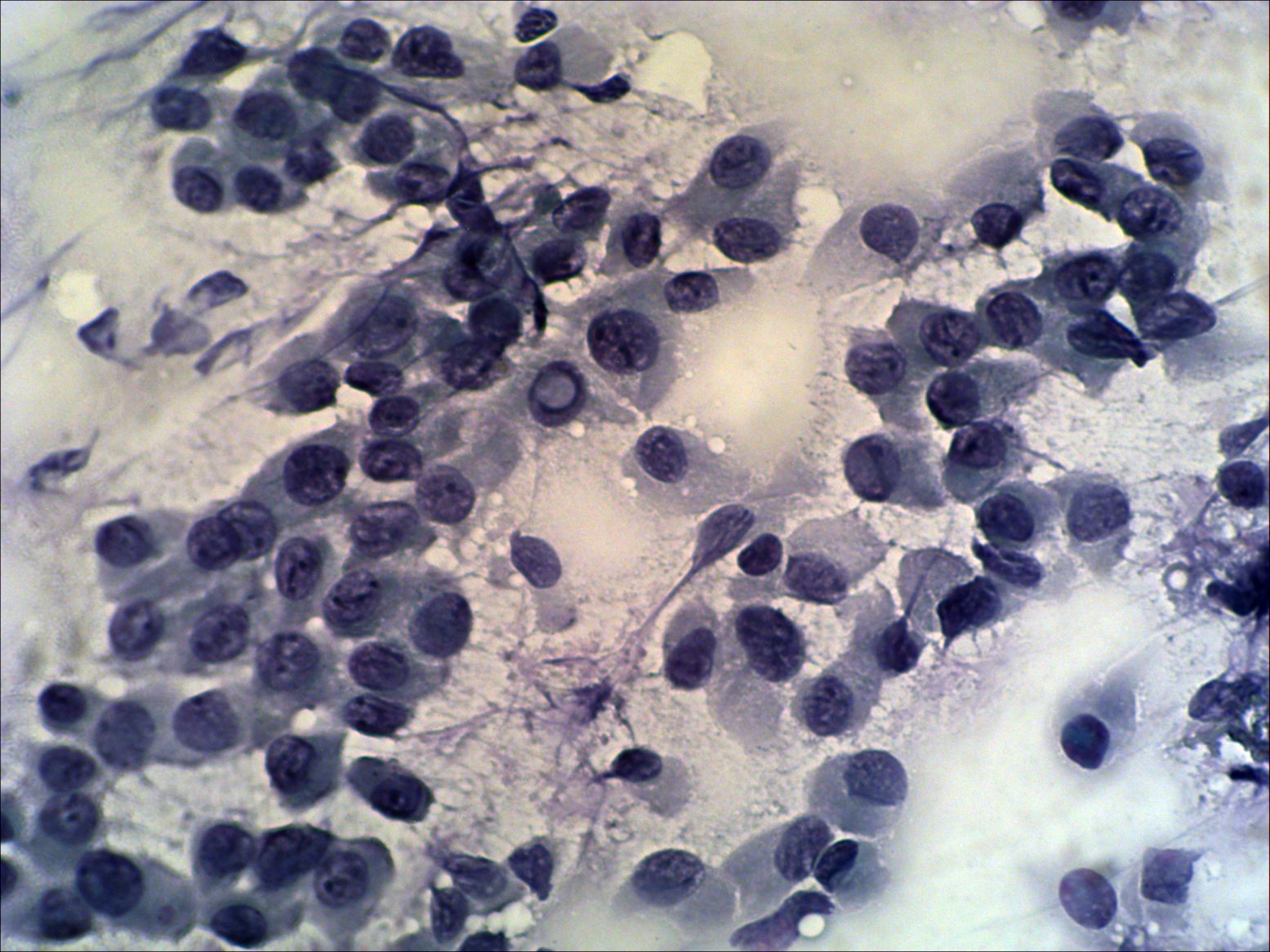
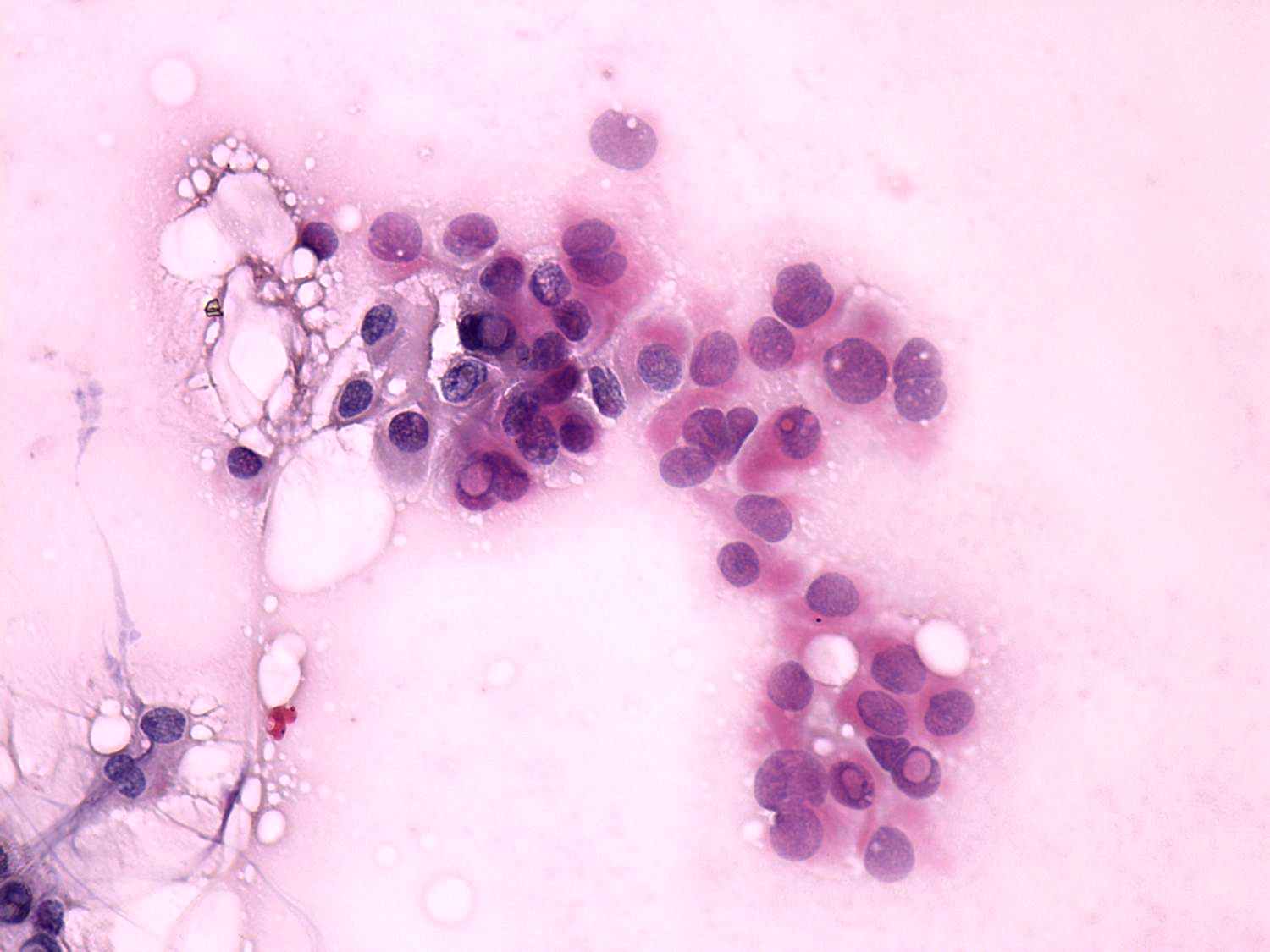
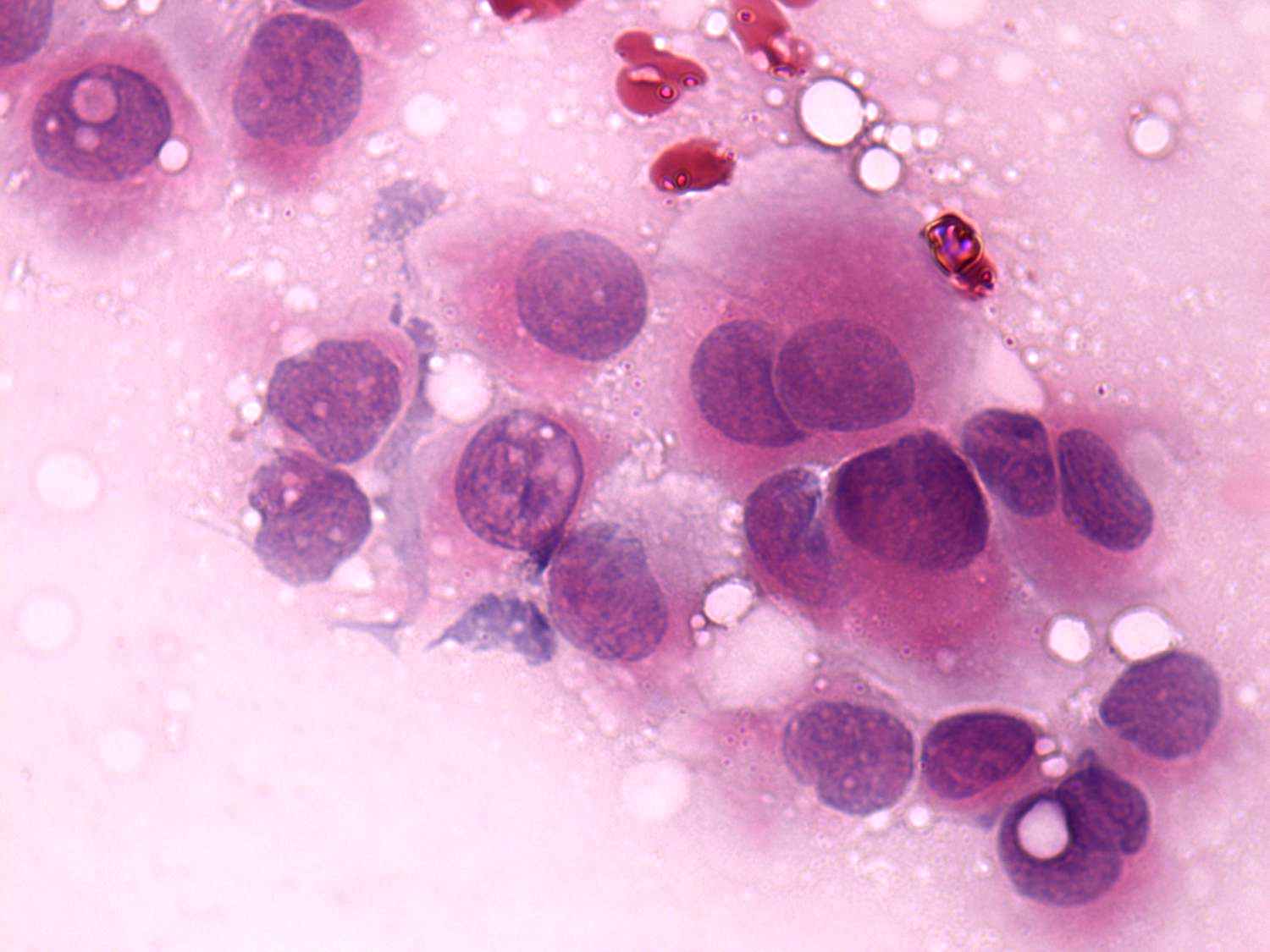
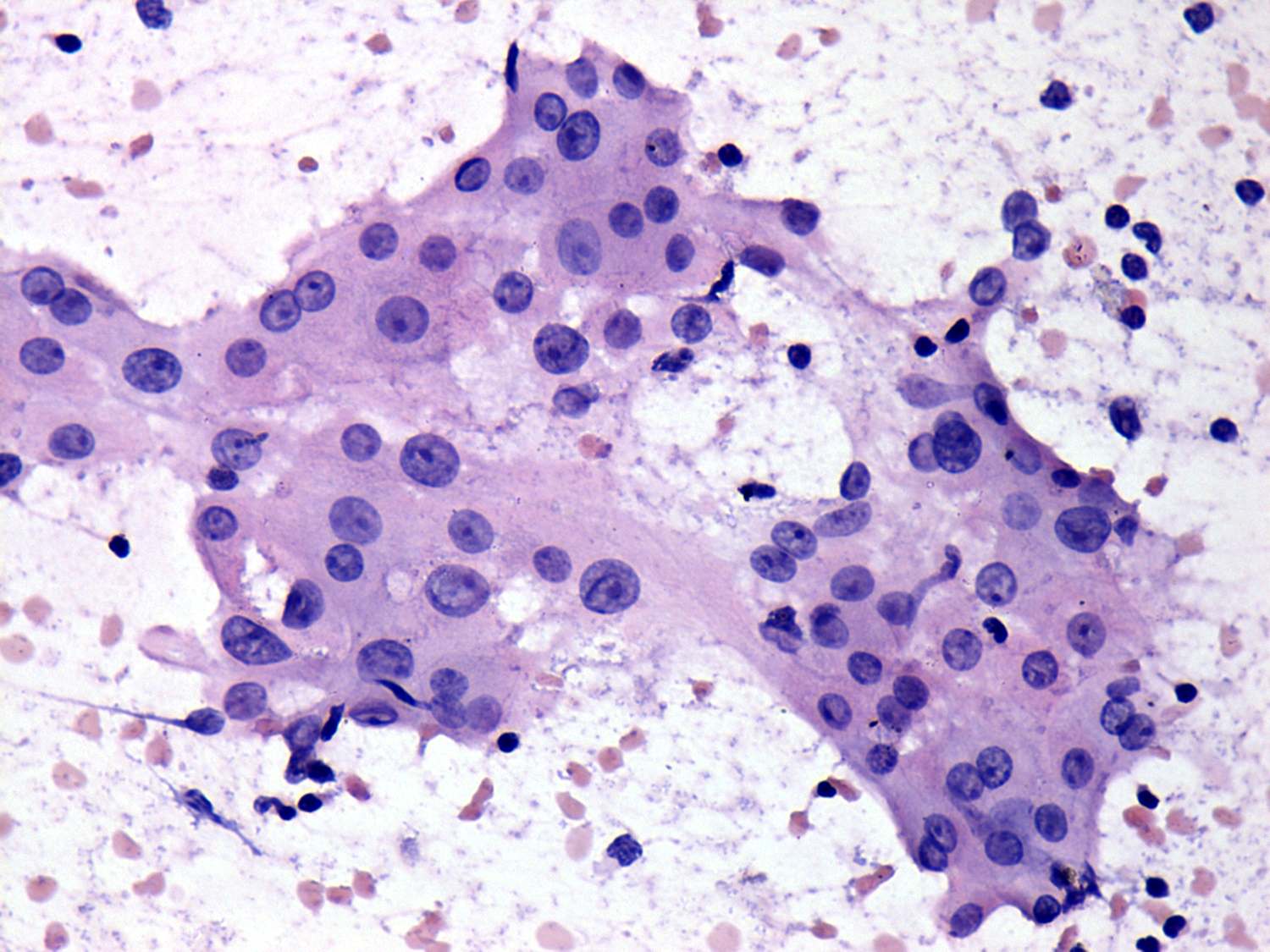
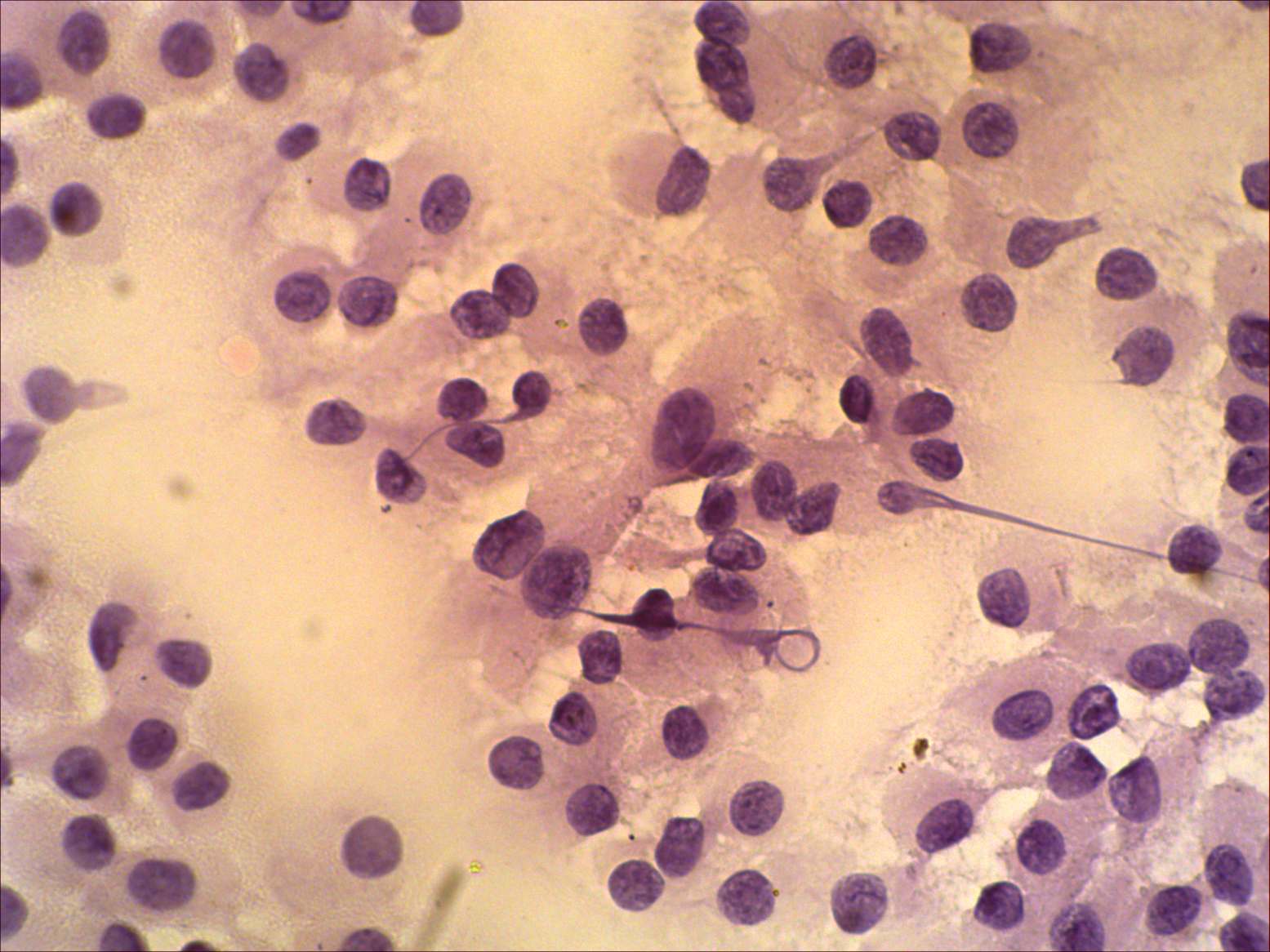
Papillary carcinomas - Figure 18. Differential diagnostics: Hashimoto's thyroiditis.
The positive predictive value of grooves and inclusions is much less in the case of oxyphilic cells. Therefore the diagnosis of a papillary carcinoma requires other cytological signs.
|
Chronic lymphocytic thyroiditis- case 55 |
Coexistent Hashimoto's thyroiditis and papillary carcinoma - case 52 |
 |
 |
 |
 |
|
|
|
Chronic lymphocytic thyroiditis- case 25 |
Coexistent Hashimoto's thyroiditis and papillary carcinoma - case 60 |
 |
 |
 |
 |
|
|
|
Chronic lymphocytic thyroiditis- case 20 |
Oxyphilic variant of papillary carcinoma - case 70 |
 |
 |
 |
 |
|
|
|
|