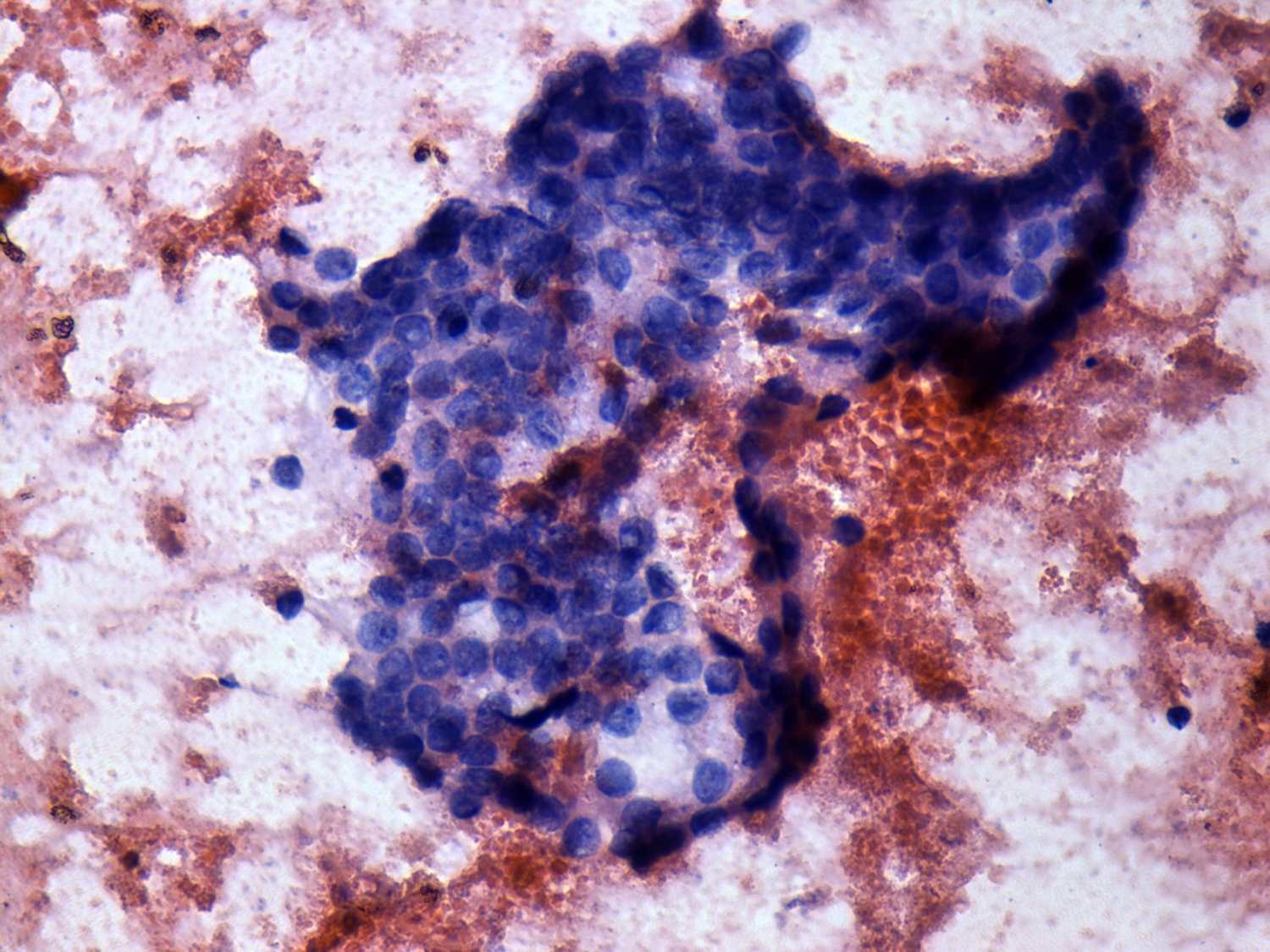
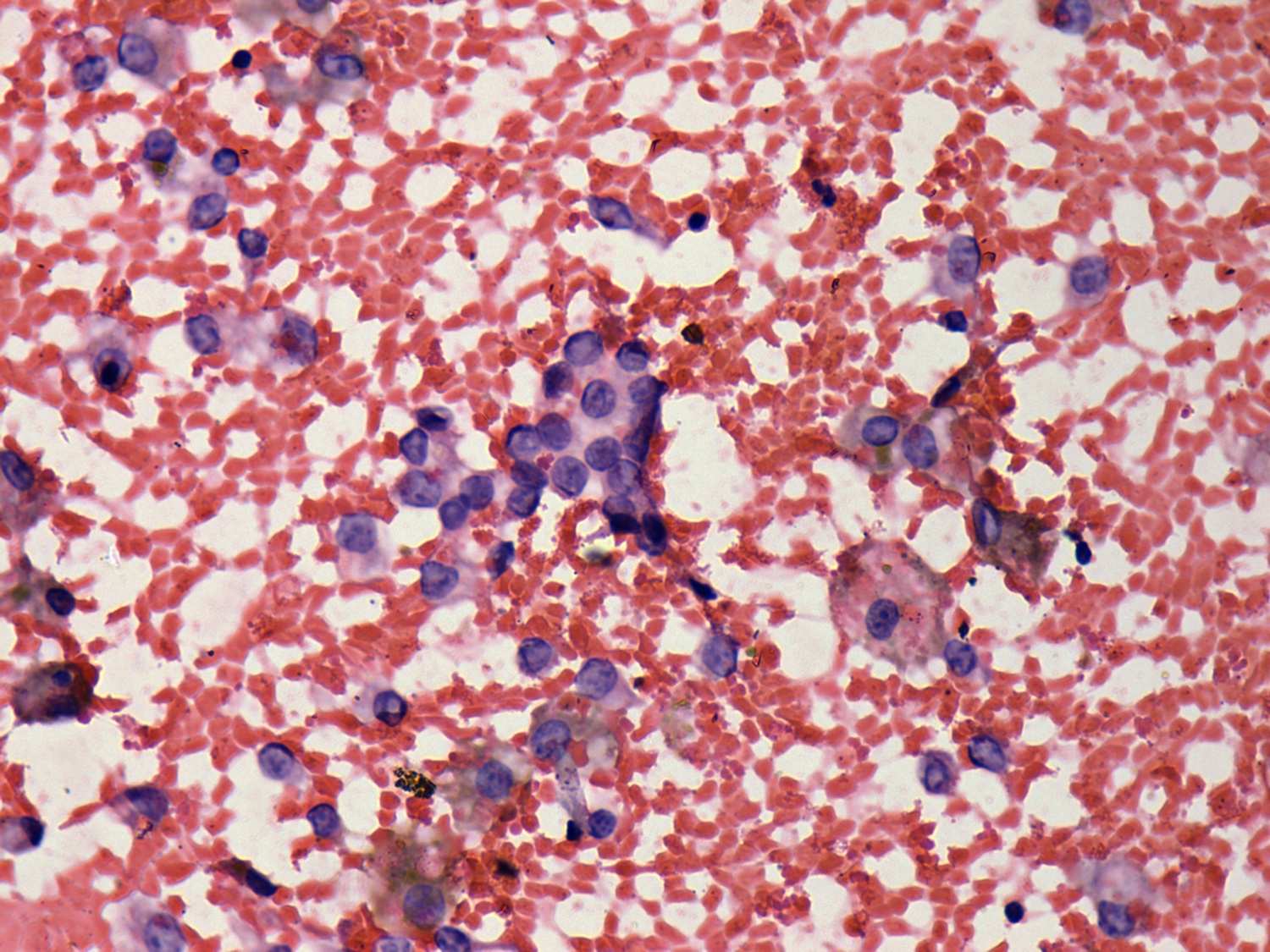
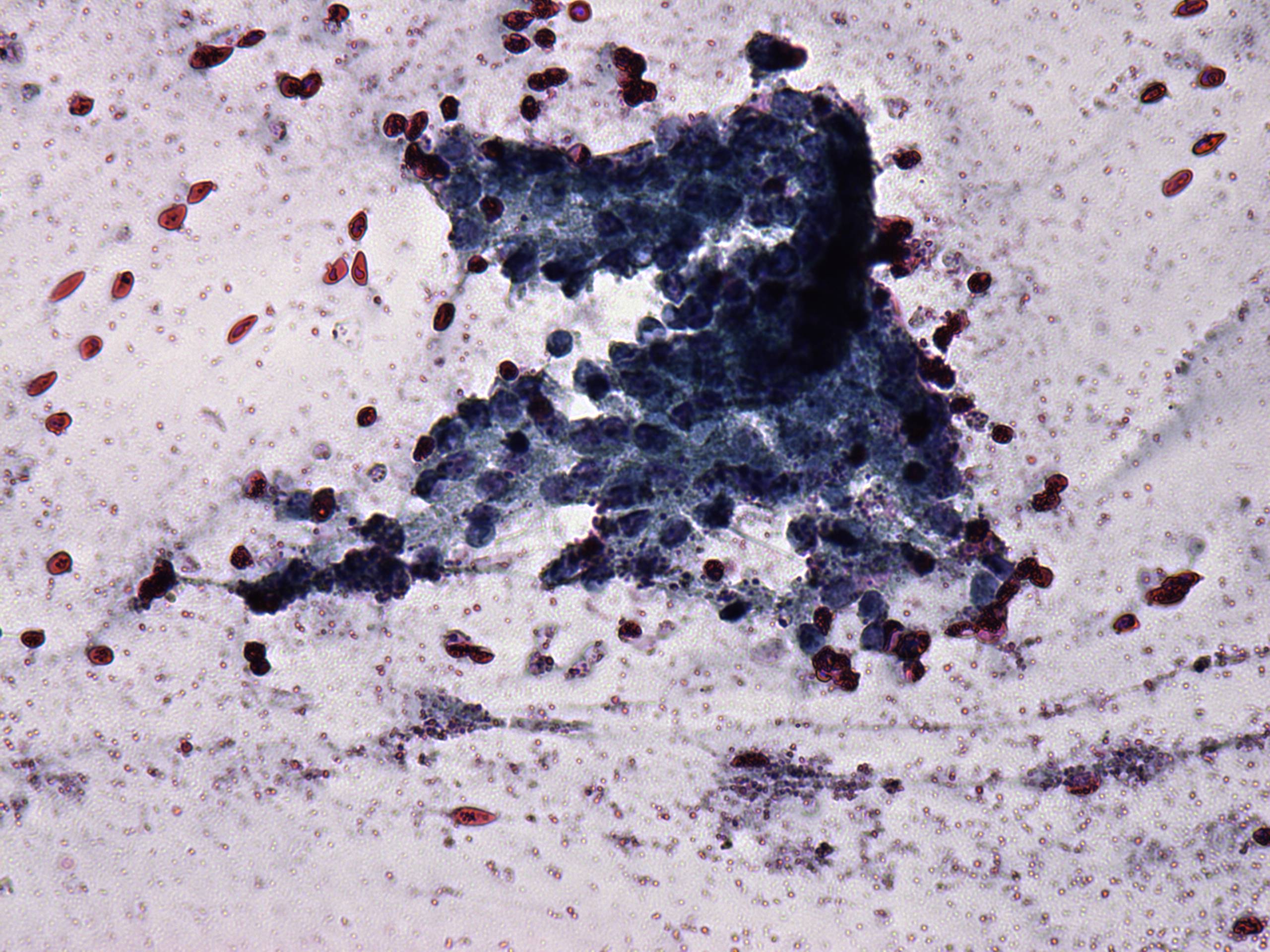
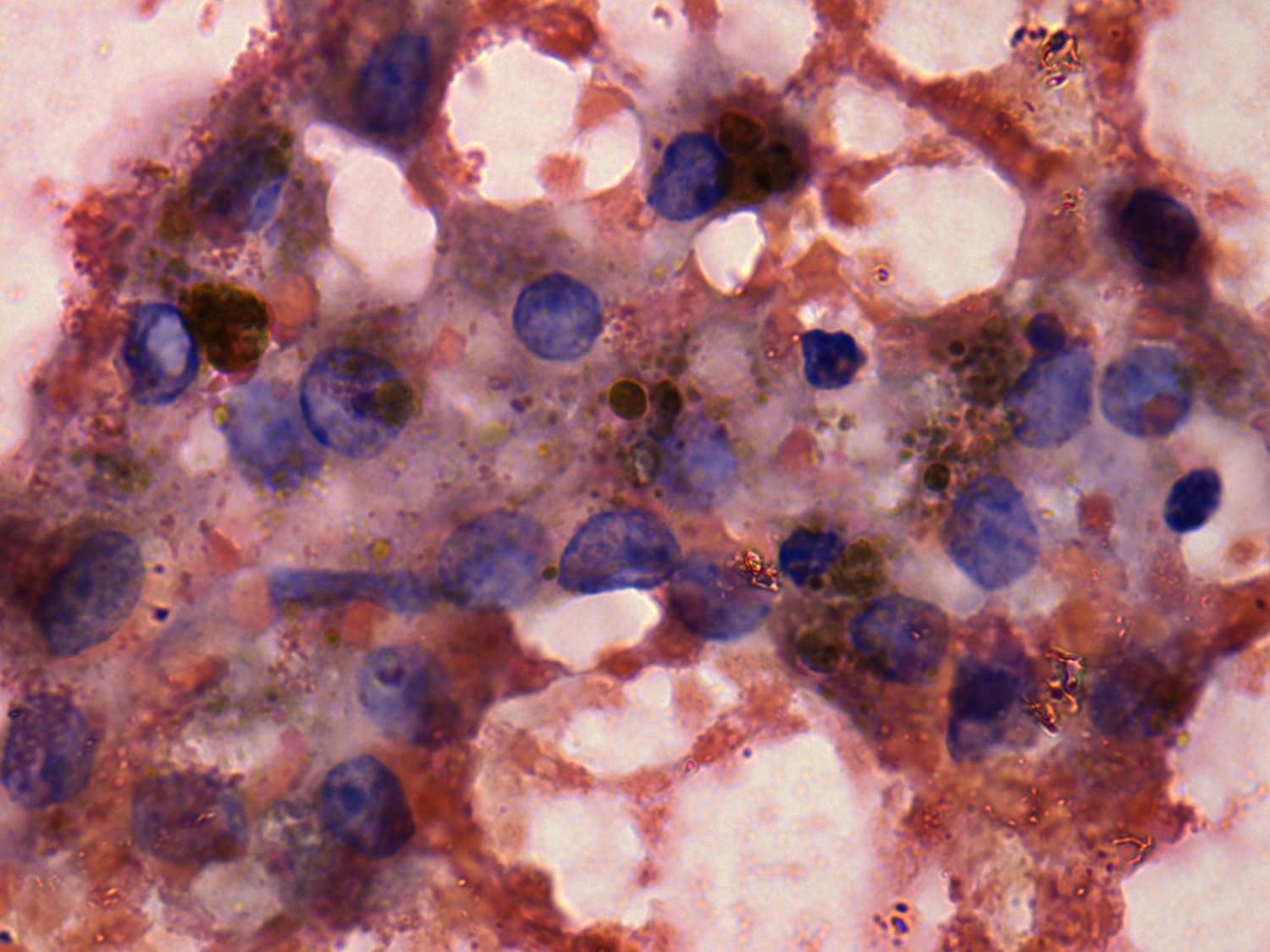
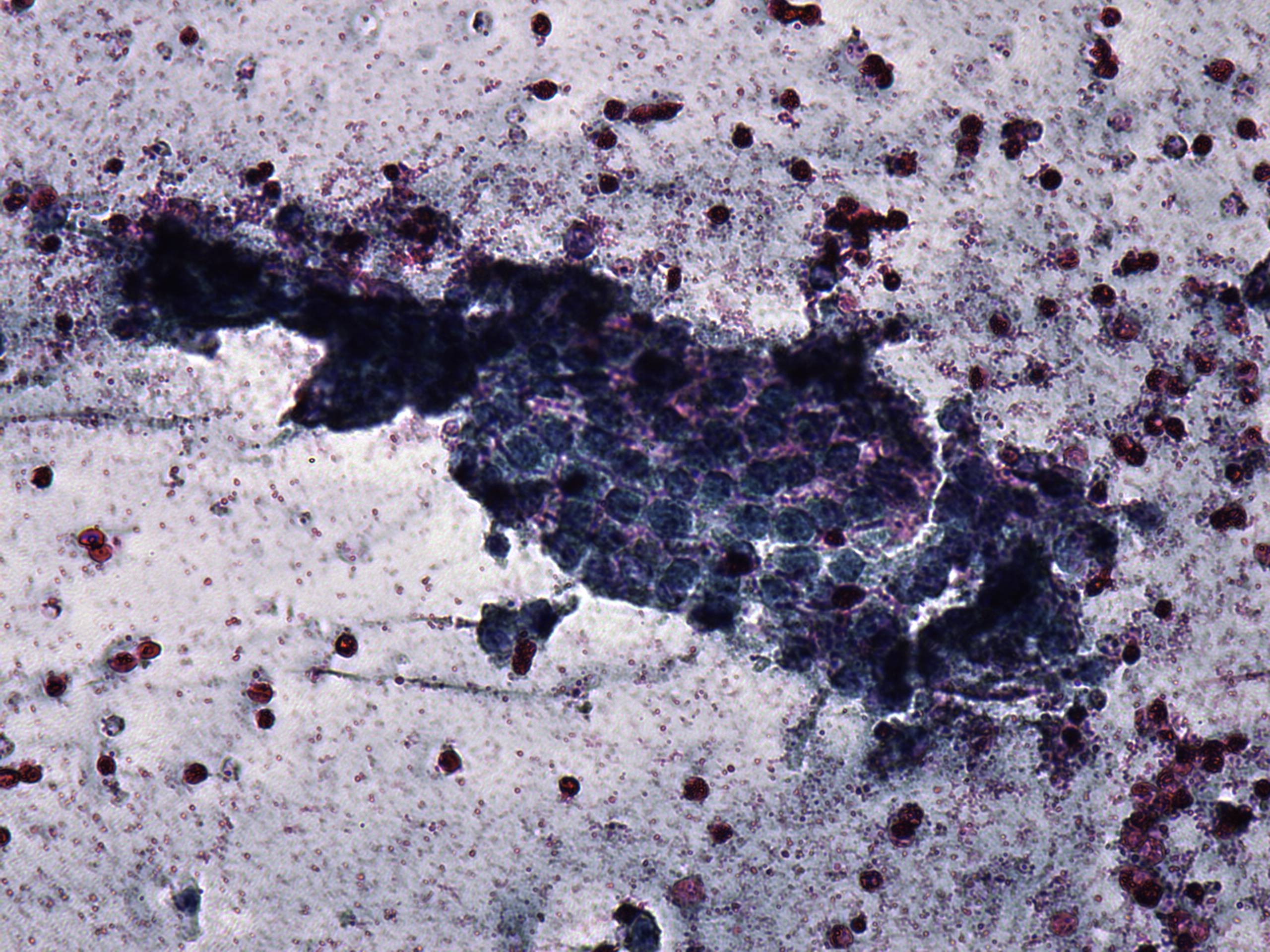
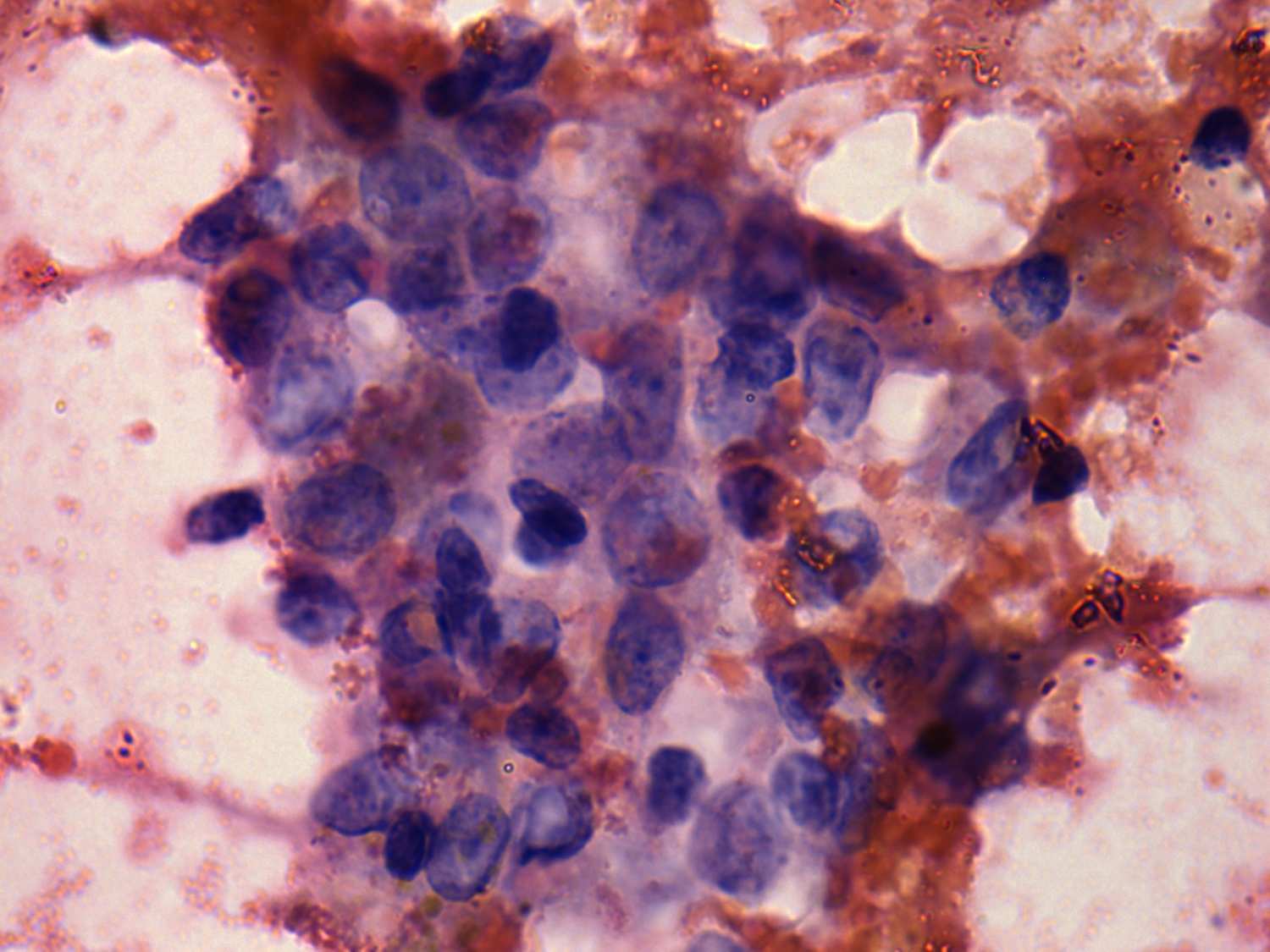
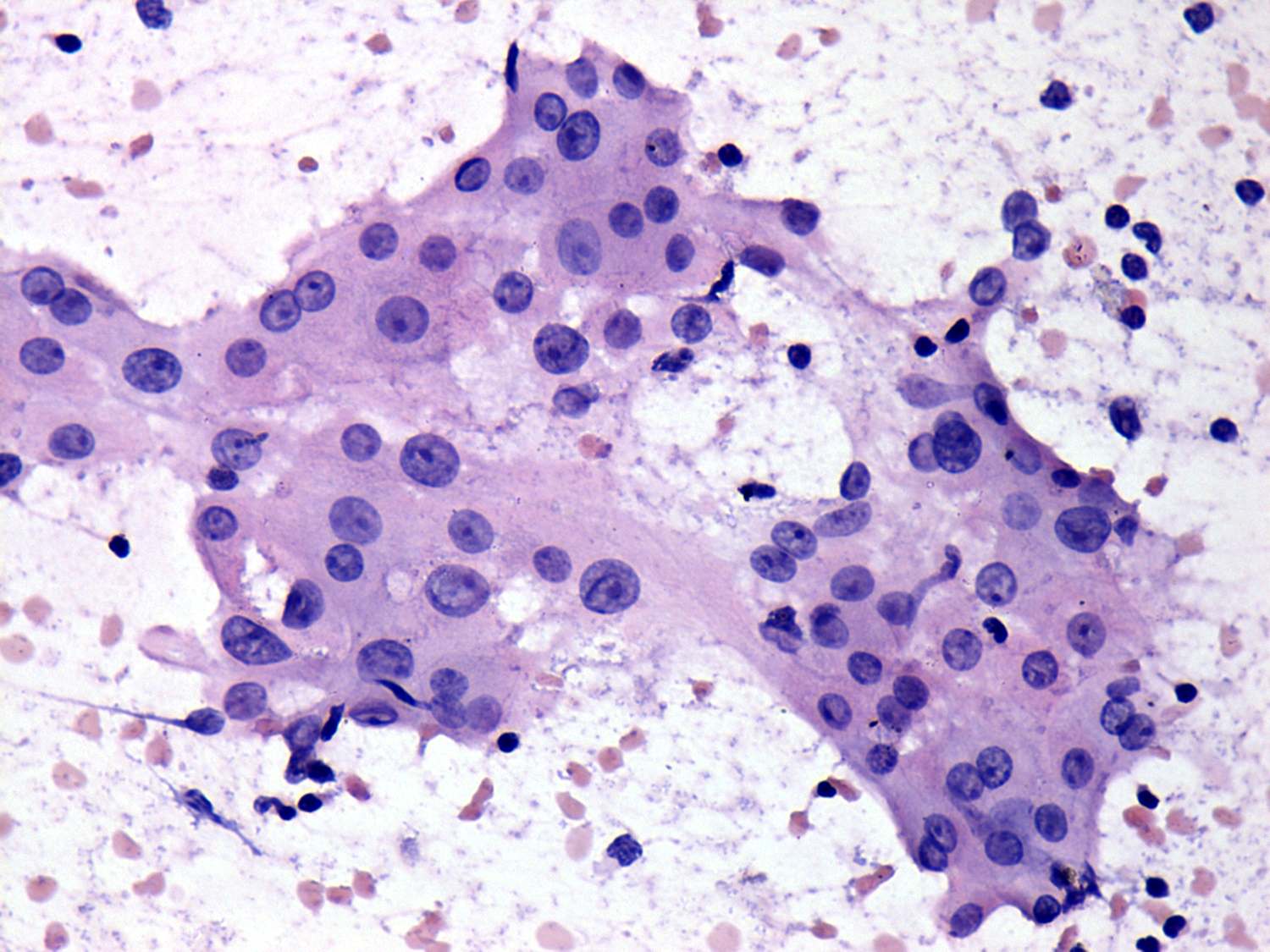
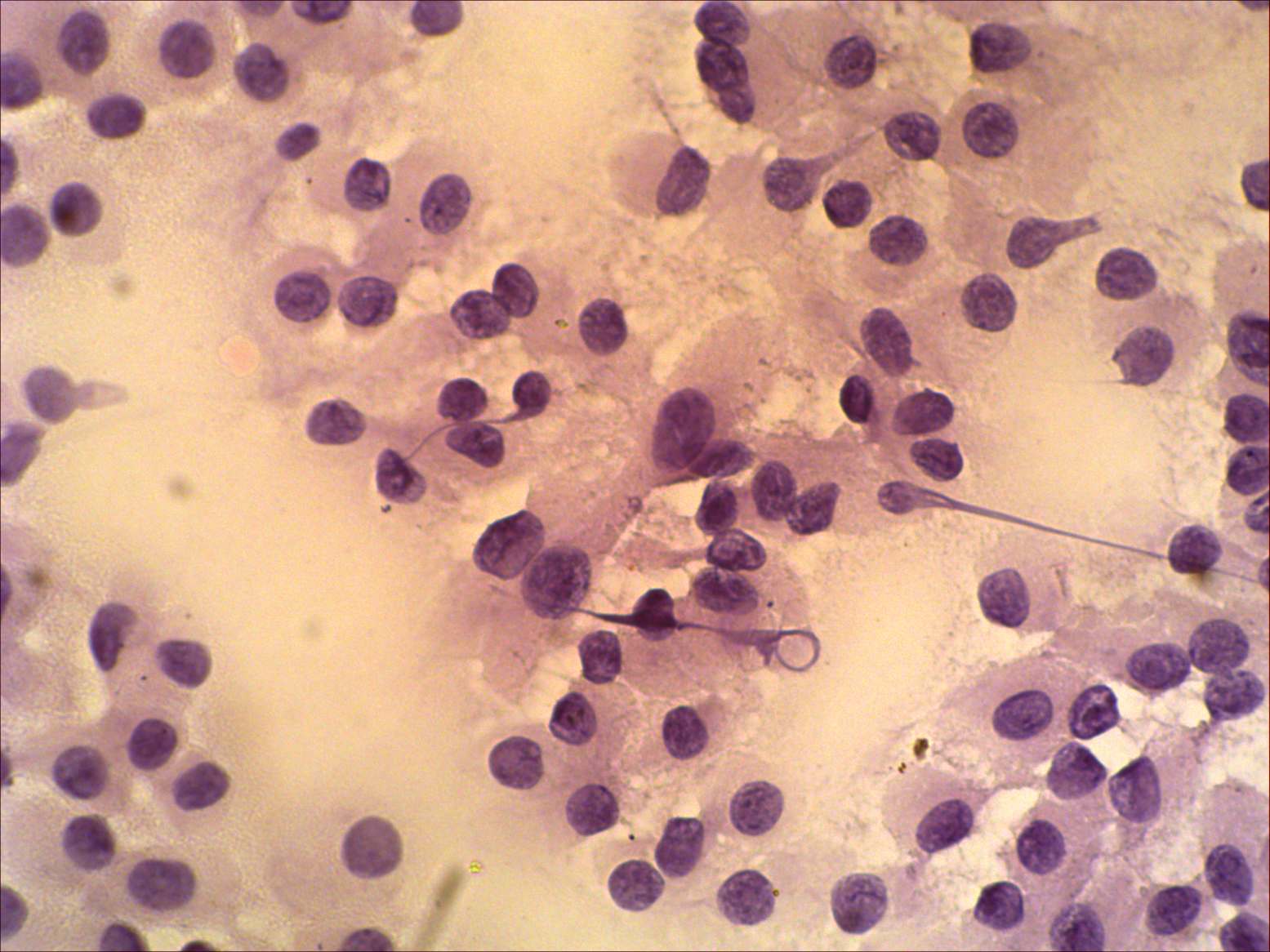
Papillary carcinomas - Figure 16. Differential diagnostics: cystically degenerated papillary carcinoma or benign lesion.
The greatest issue in the diagnosis of papillary carcinoma is gaining adequate material in cystic lesions. Even in cases when the smear contains reliable number of cells, the diagnosis may be more difficult because of degenerative changes of follicular cells. The presence of nuclear crowding is one of the most important sign in such cases.
|
Benign nodular hyperplasia- case 16 |
Papillary carcinoma - case 27 |
 |
 |
 |
 |
|
|
|
Benign nodular hyperplasia- case 25 |
Papillary carcinoma - case 40 |
 |
 |
 |
 |
 |
 |
|
|
|
Chronic lymphocytic thyroiditis- case 20 |
Oxyphilic variant of papillary carcinoma - case 70 |
 |
 |
 |
 |
|
|
|
|