
|
|
Subacute granulomatous de Quervain's thyroiditis - Case 16.
|

|


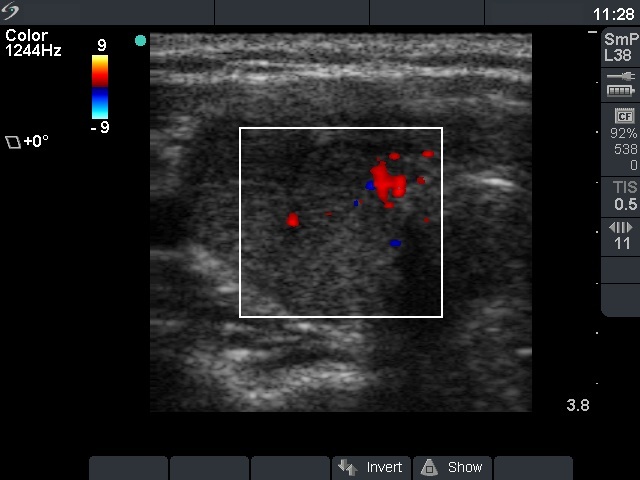
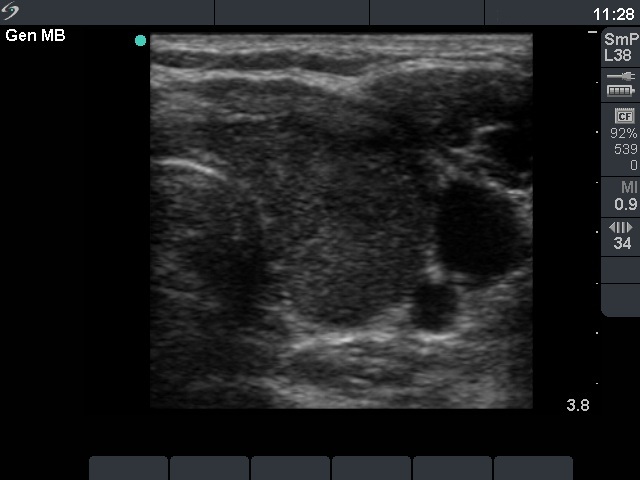
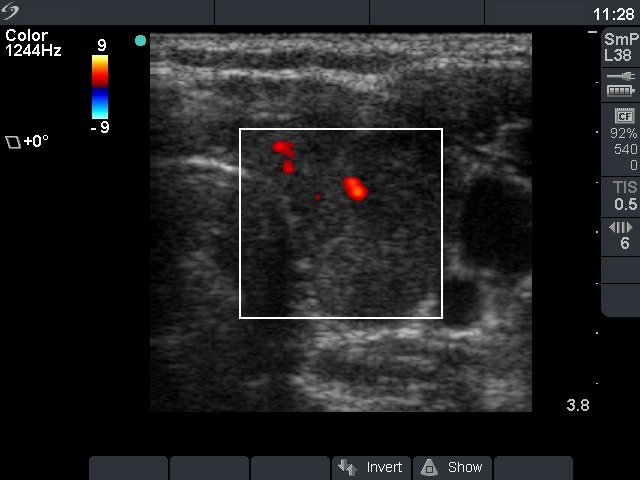
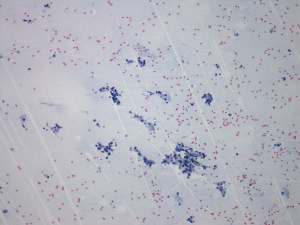
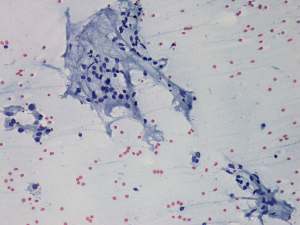

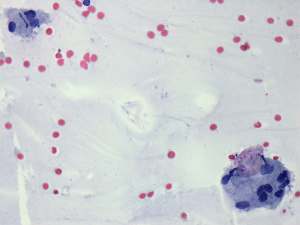


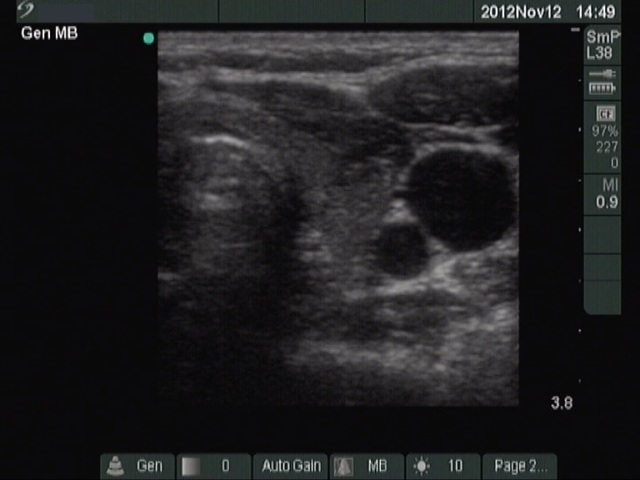

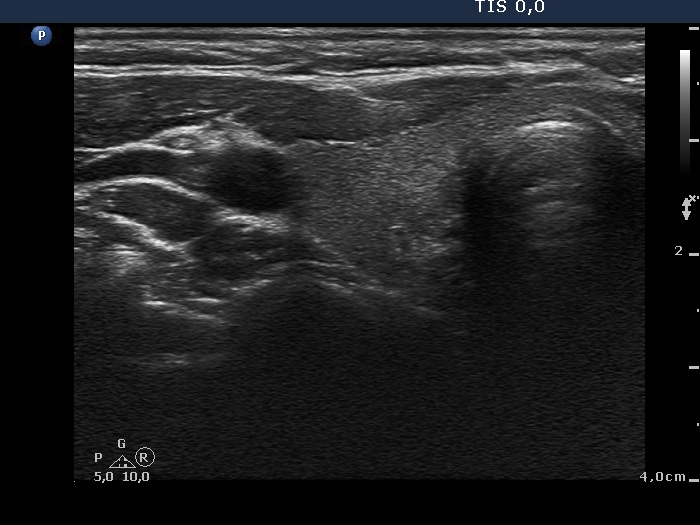
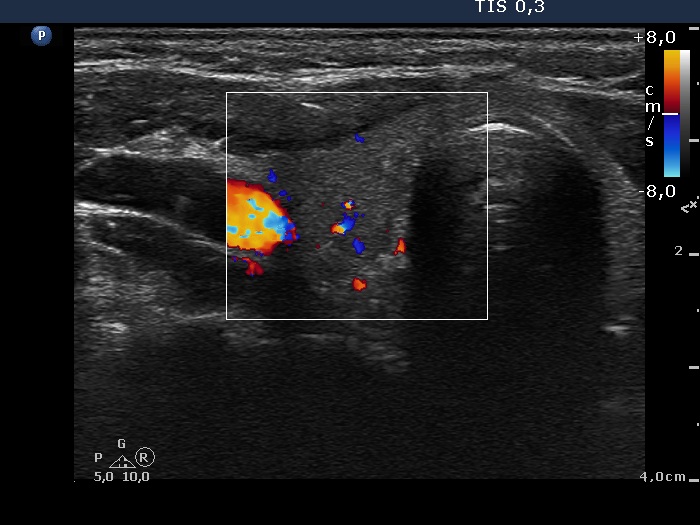
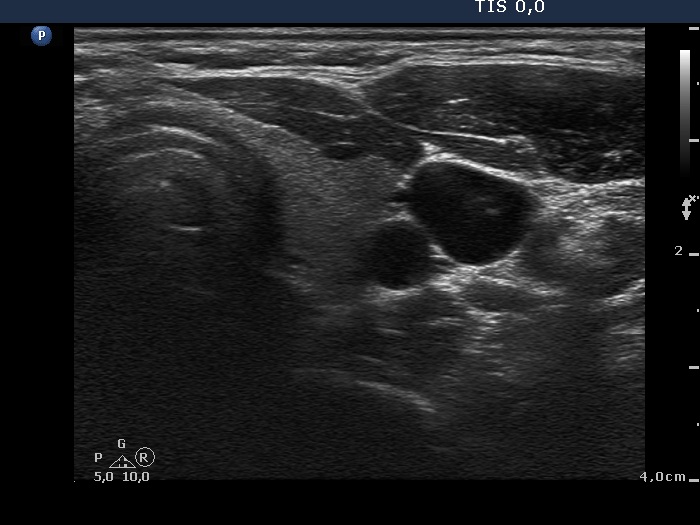
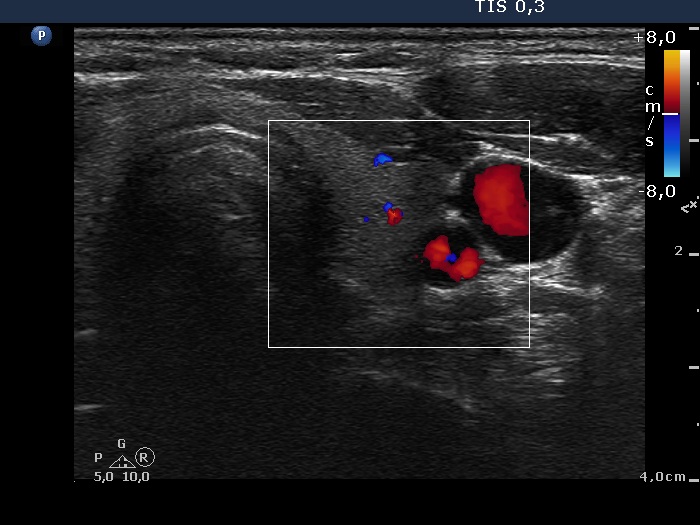
First examination (first and second row of images):
Clinical presentation: a 33-year-old woman was referred with typical complaints of subacute thyroiditis lasting for 6 weeks.
Palpation: both thyroids were hard and painful.
Functional state: moderate degree of hyperthyroidism with TSH-level 0.001 mIU/L, FT4 27.2 pM/L. Erythrocyte sedimentation rate was 49 mm/H, CRP was 9.2 mg/L.
Ultrasonography: the thyroid was hypoechogenic and inhomogeneous. The vascularization was average.
Cytological diagnosis: subacute, granulomatous de Quervain's thyroiditis.
Suggestion: steroid therapy for 6 weeks. The inflammatory complaints of the patient suddenly stopped within 24 hours of the steroid intake and did not recur after discontinuation of the steroid.
Follow-up examination 4 months after initial investigation (third row of images):
Clinical presentation: the patient had no complaints.
Palpation: no abnormality.
Functional state: subclinical hypothyroidism with TSH-level 4.92 mIU/L, FT4 13.7 pM/L. Erythrocyte sedimentation rate was 11 mm/H, CRP was 0,9 mg/L.
Ultrasonography: the thyroid became smaller and the echo structure had normalized although there were several minimally-moderately hypoechogenic areas in both lobes. There were no significant changes in the vascularization.
Follow-up examination 21 months after initial investigation (fourth row of images):
Clinical presentation: the patient had no complaints.
Palpation: no abnormality.
Functional state: euthyroidism hypothyroidism with TSH-level 1.78 mIU/L.
Ultrasonography: the thyroid became completely echonormal. There were no significant changes in the vascularization.
.


