Hashimoto's thyroiditis - case 2108
|
 |
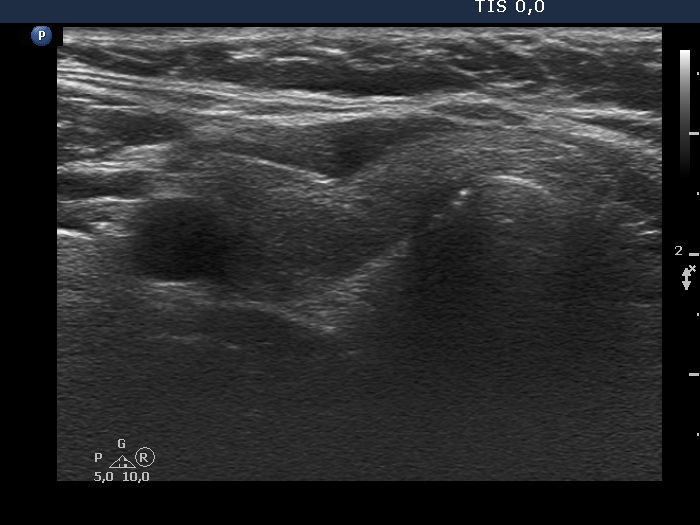 |
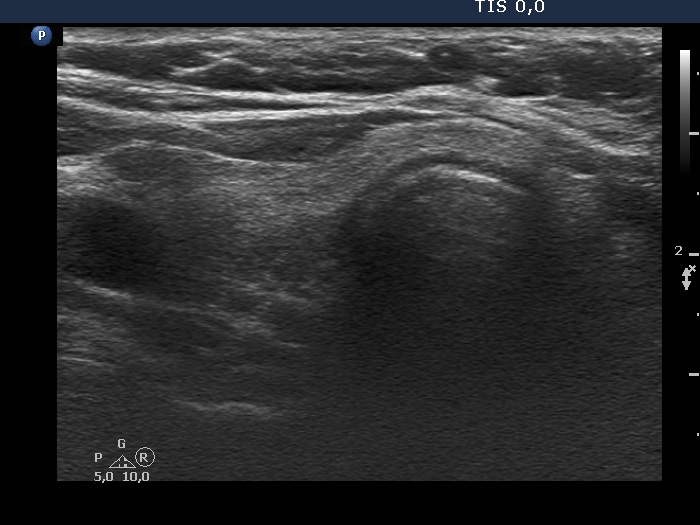
This case should not cause great problem for an experienced sonographer: this is one of the most common patterns of Hashimoto's thyroiditis. The echogenicity index (the % of hypoechogenic areas) is more than 50%. These hypoechogenic areas have ill-defined borders.
|
| |
|
Subacute, de Quervain's thyroiditis (cytology) - case 1036 |
Subacute, de Quervain's thyroiditis (cytology) - case 1454 |
 |
 |
 |
 |
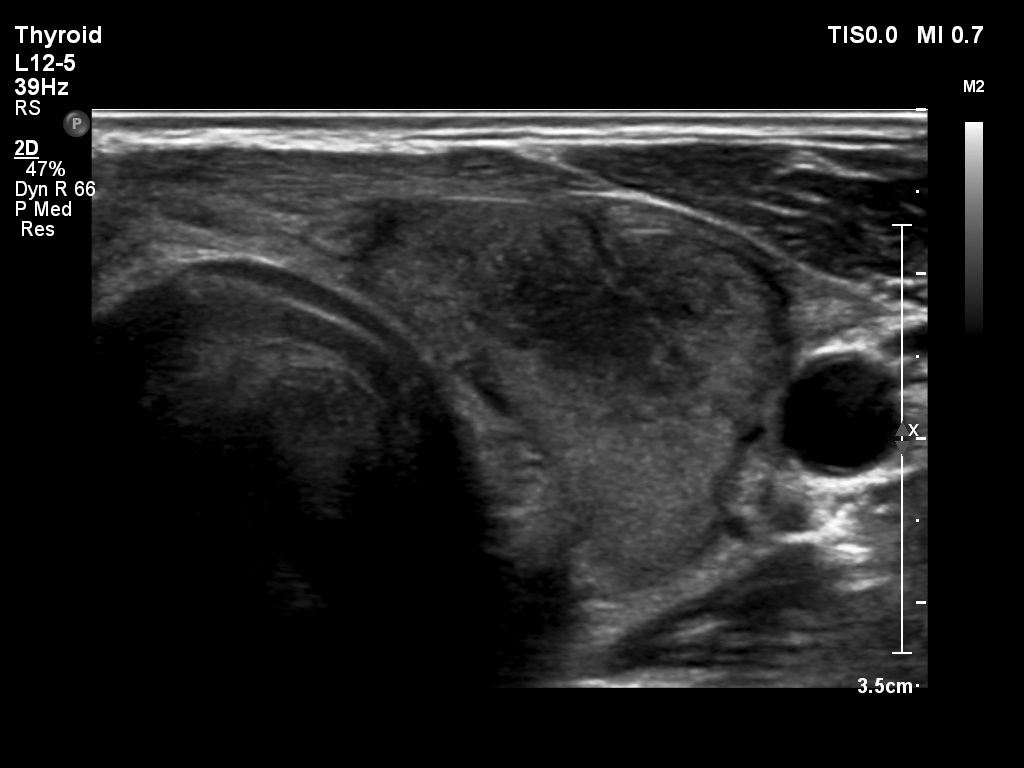
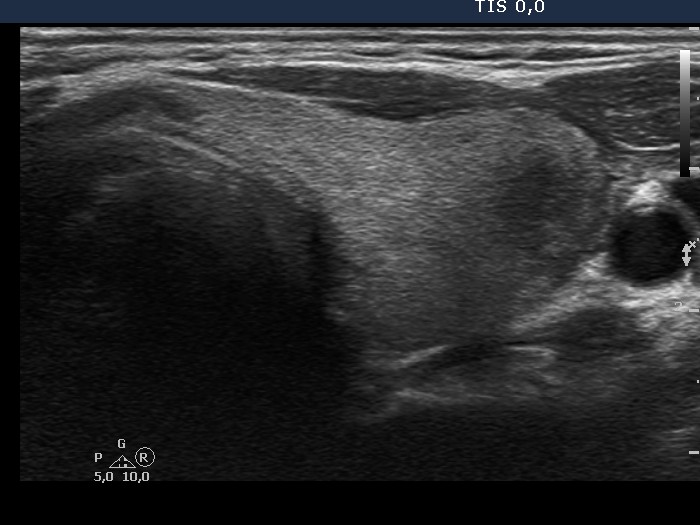
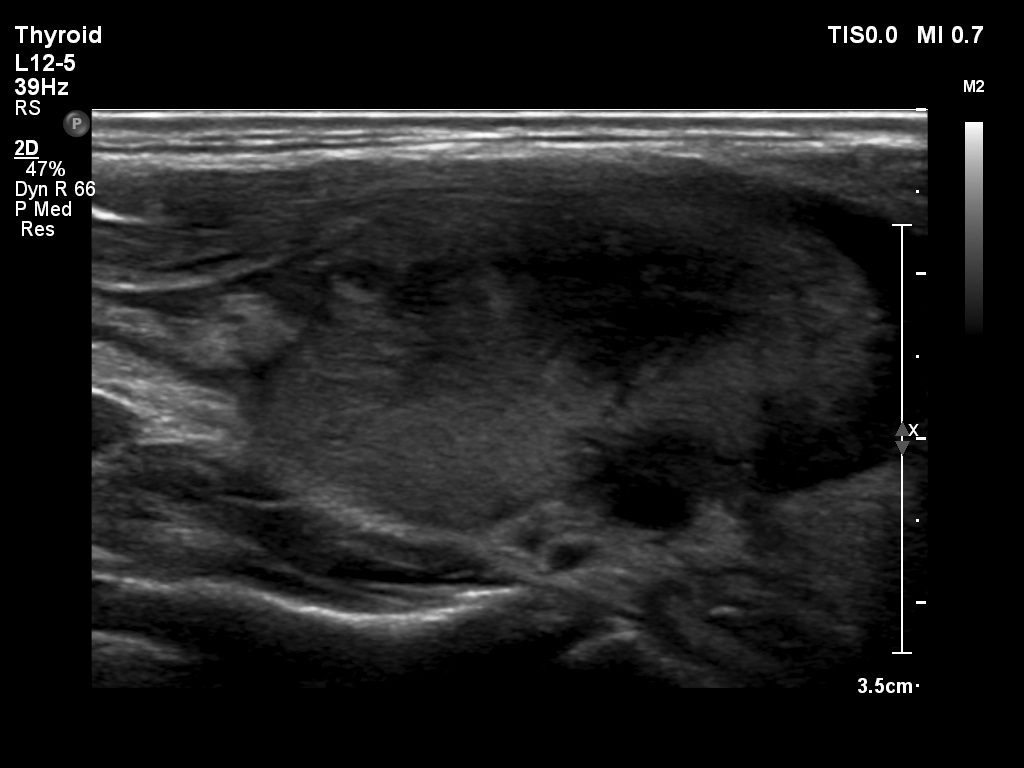
The borders of the discrete hypoechoic areas are blurred in both cases, in the right case even lobulated. Taking the clinical picture into account, we can avoid overrating this pattern as suspicious for malignancy; in fact, this is the typical presentation of subacute, de Quervain's thyroiditis.
|
| |
|
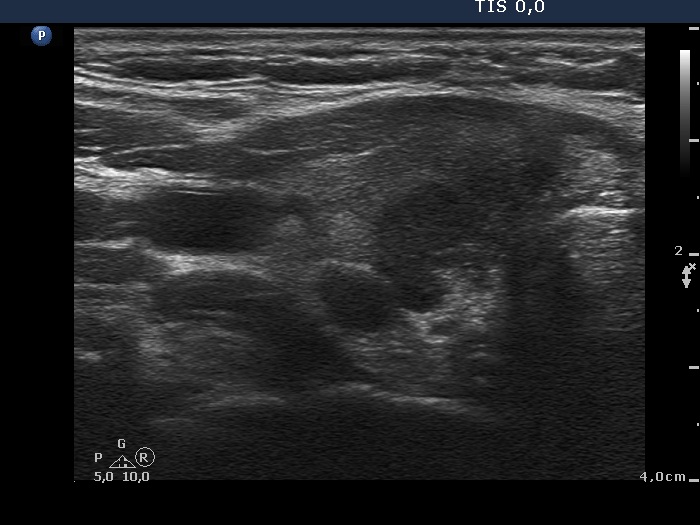
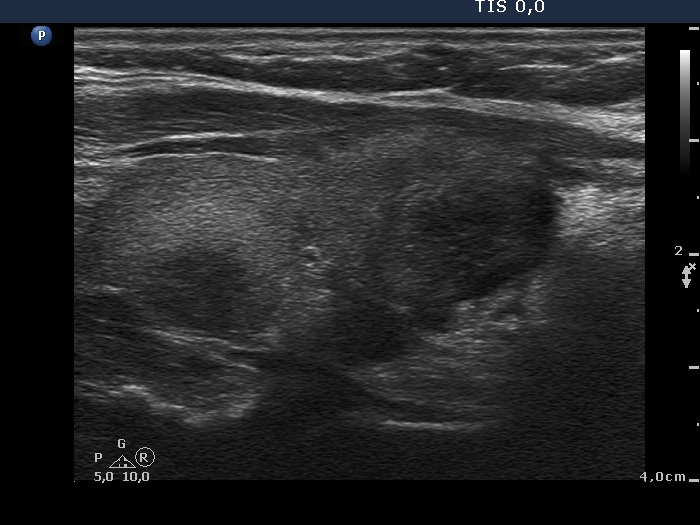
Hashimoto's thyroiditis (cytology) - case 1188 |
Transverse scans |
Longitudinal scans |
 |
 |
 |
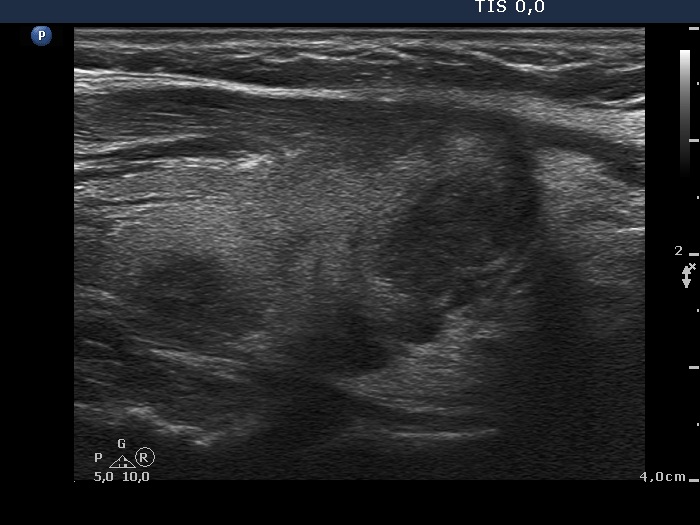 |
The thyroid presents numerous hypoechogenic lesions with partly blurred and partly spiculated margins. The presence of multiple hypoechoic lesions argues for Hashimoto's thyroiditis and stands against the presence of pathological nodule.
|
| |
|
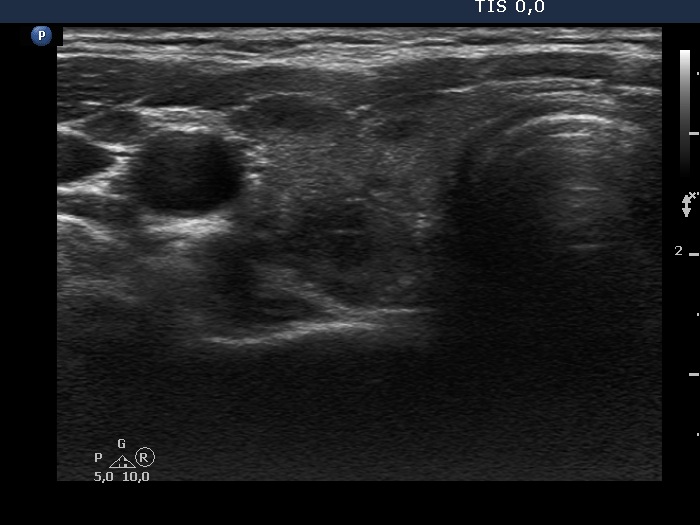
Hashimoto's thyroiditis (cytology) - case 430 |
Transverse scan |
Longitudinal scan |
 |
 |
The situation is similar to the former: the thyroid has numerous hypoechoic areas which present irregular borders. The clue is again the recognition that these discrete areas are not pathological nodules but more active foci of Hashimoto's thyroiditis.
|
| |
|
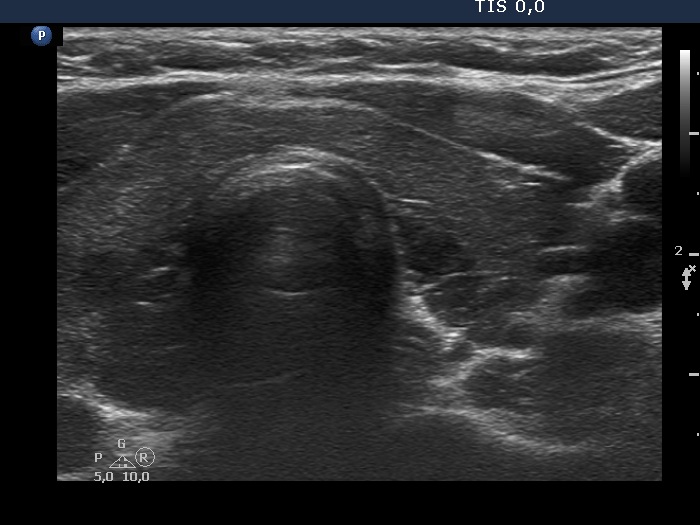
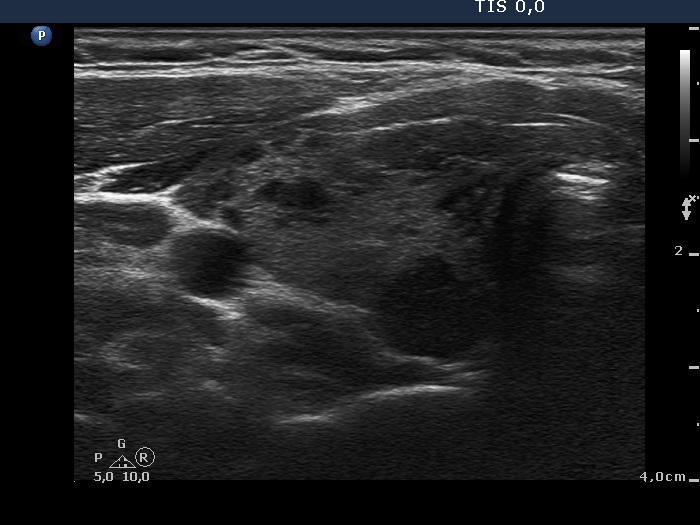
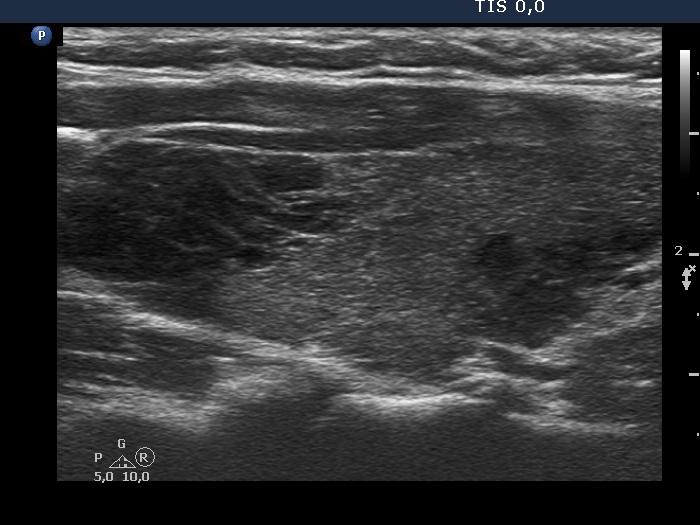
Hashimoto's thyroiditis (cytology) - case 2080 |
Hashimoto's thyroiditis (cytology) - case 1496 |
 |
 |
 |
 |
Both cases present numerous hypoechoic areas with puzzle-like, spiculated margins. In fact, this is one of the most typical presentations of Hashimoto's thyroiditis.
|
| |
|
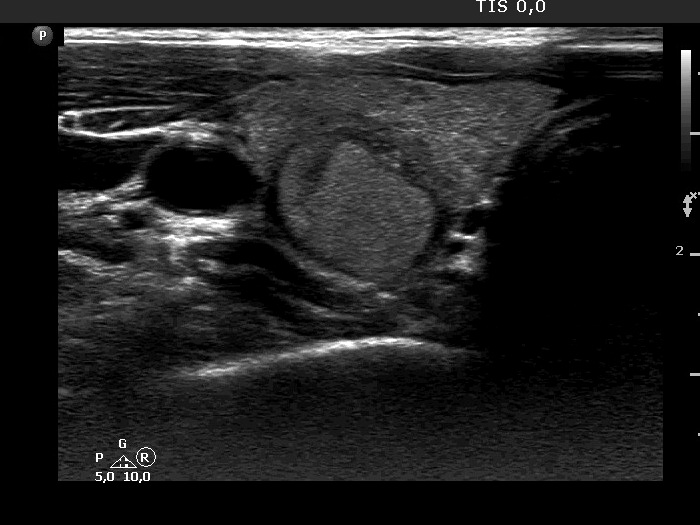
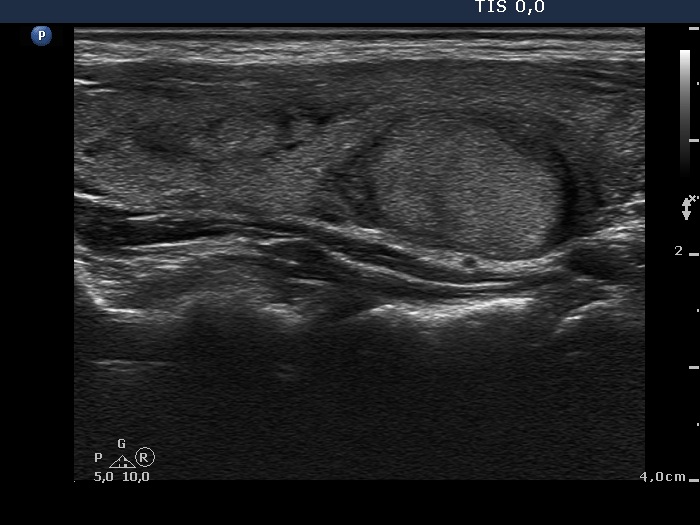
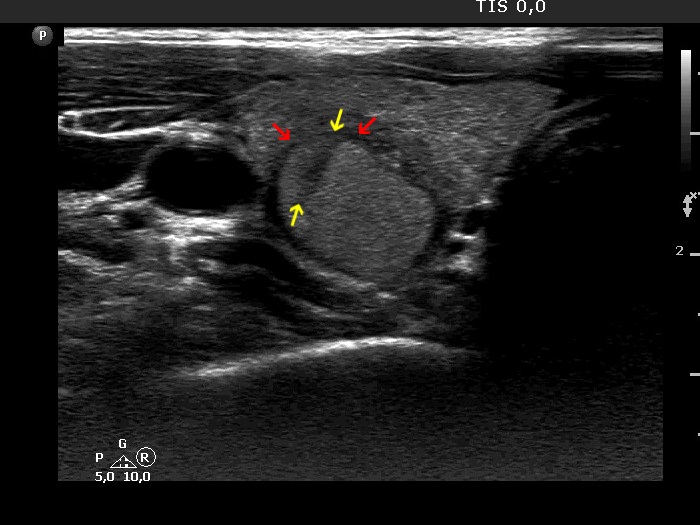
Hashimoto's thyroiditis (cytology) - case 2168 |
 |
 |
 |
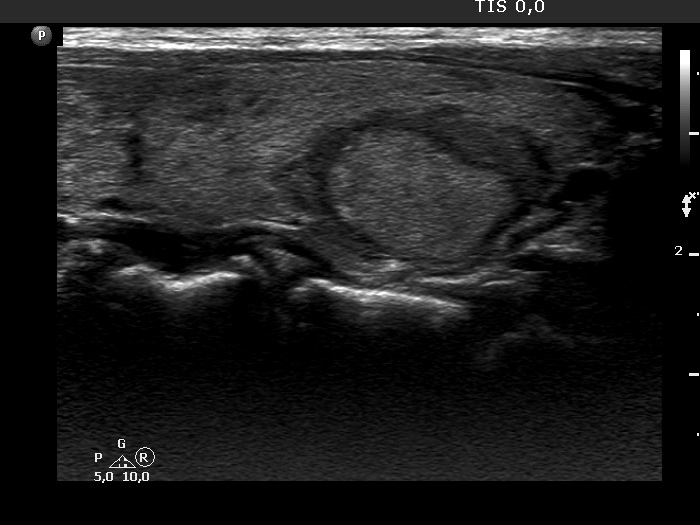 |
The two protrusions (marked with red arrows) make the appearance of the margin lobulated. However, these lobulations are caused by the infiltration of the lesion by the underlying thyroiditis (yellow arrows).
|
| |
|
Hashimoto's thyroiditis (cytology) - case 54 |
 |
 |
 |
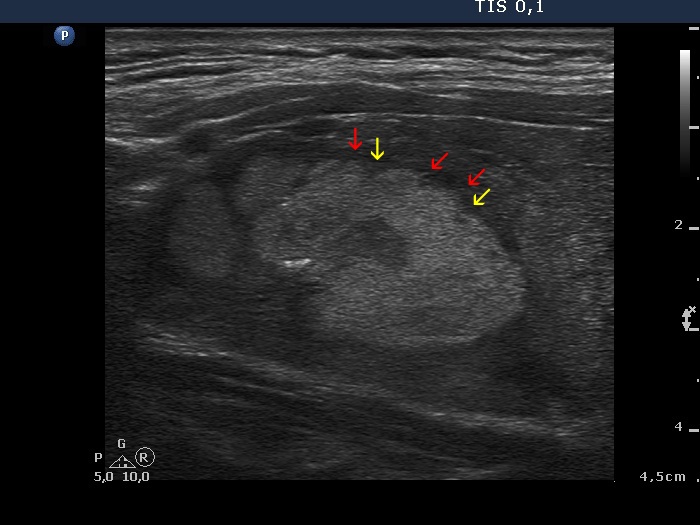 |
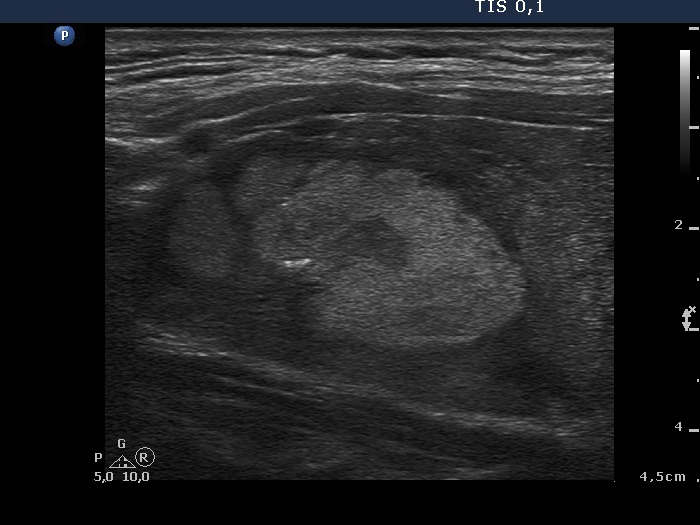
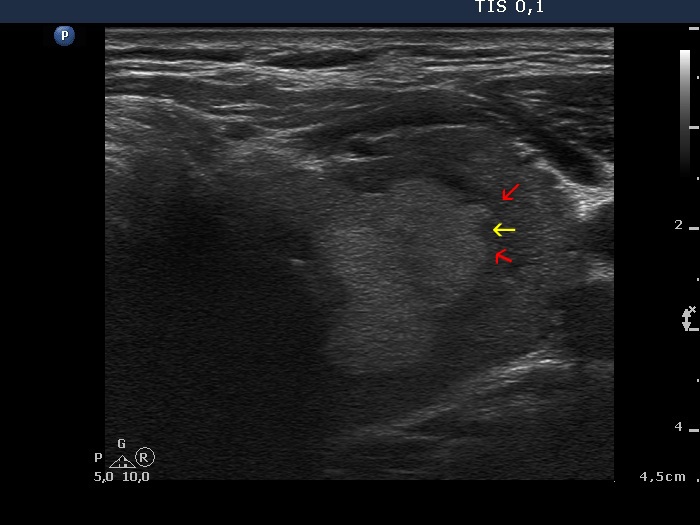
The primary protrusions in this case are caused by the underlying thyroiditis (yellow arrows), while the protrusions of the isoechoic lesion marked with red are only consequences of the former.
|
|


