
|
|
The composition of the nodule - case 142
|

|


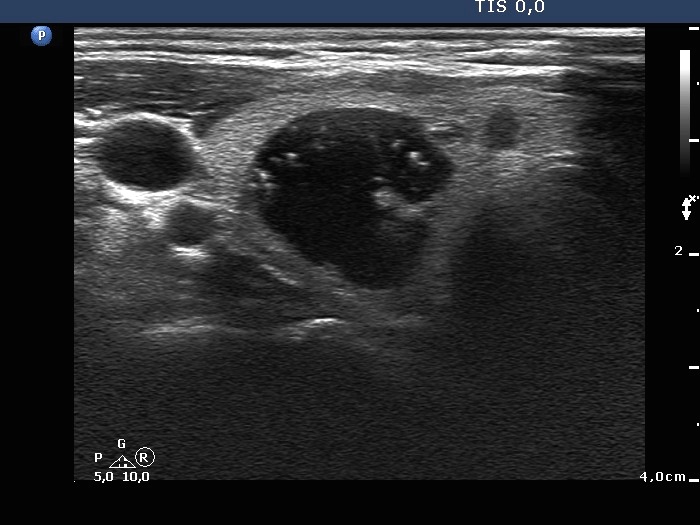
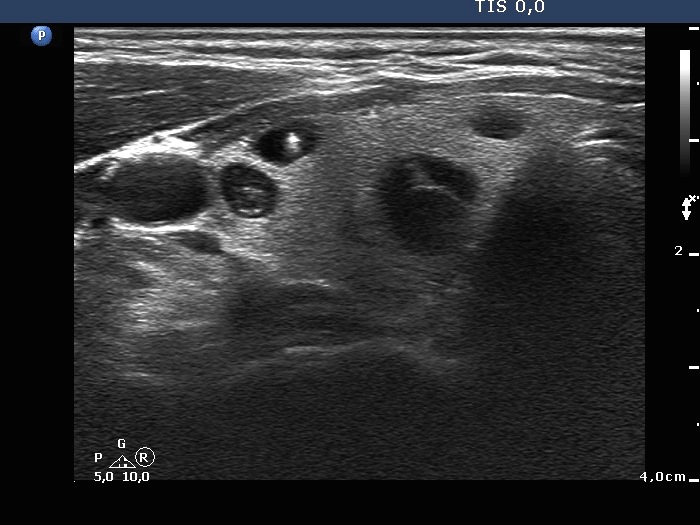
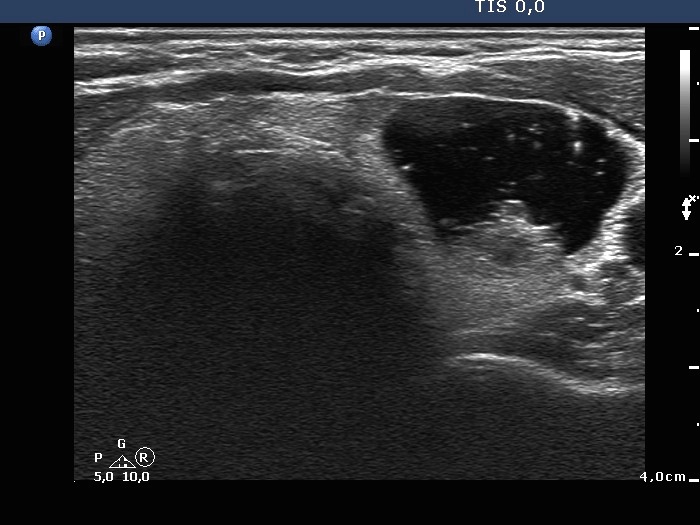
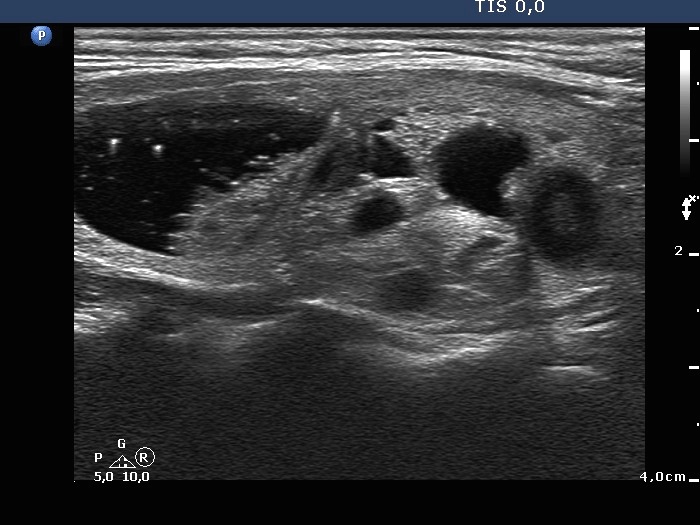
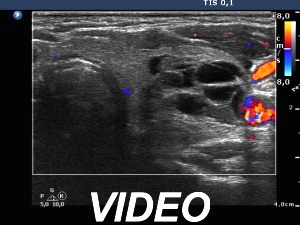
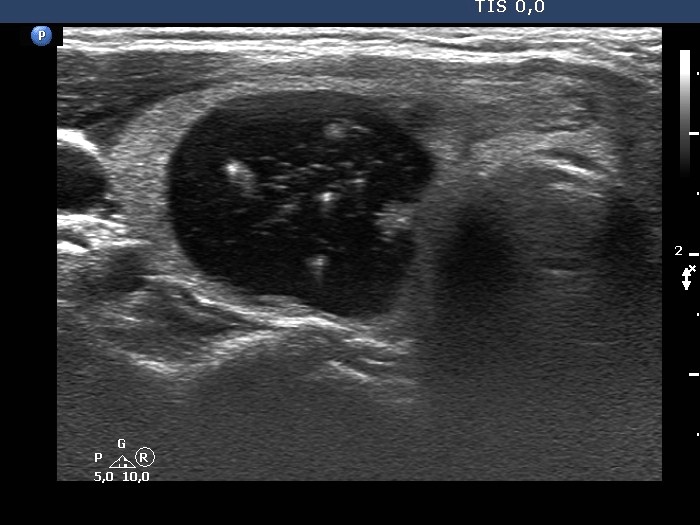

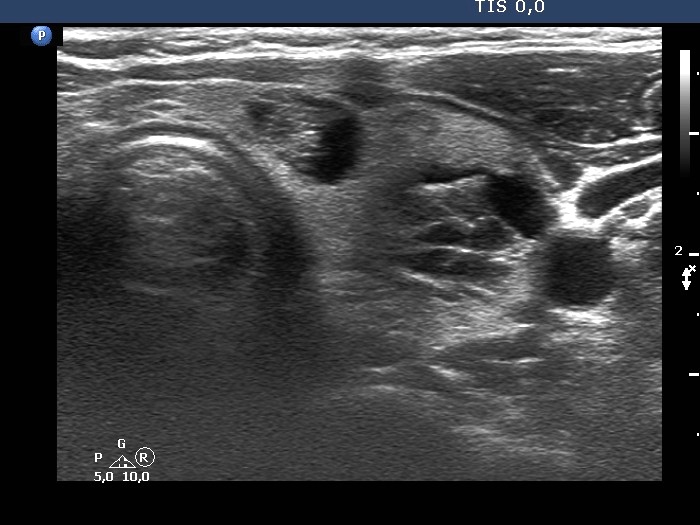
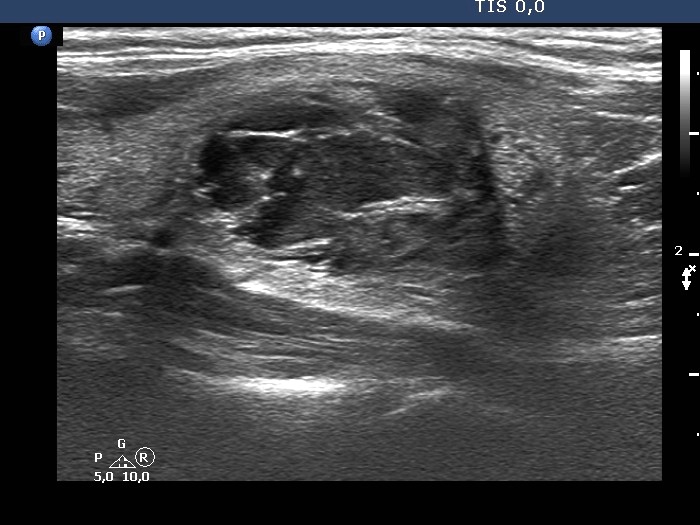
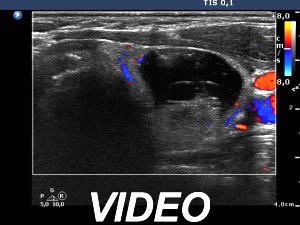
First examination (first row of images):
Clinical presentation: A 44-year-old woman has noticed the enlargement of the region of the thyroid for two months.
Palpation. Both lobes were nodular on palpation.
Result of blood test: TSH 1.28 mIU/L.
Ultrasonography. The thyroid was echonormal. There were multiple cystic areas and nodules in both lobes. The smaller cystic lesions in the right lobe were cystic areas, i.e. dilated macrofollicles. The largest lesion was a peripheral-type cystic nodule. The nodule in the upper part of the left lobe was a peripheral-type cyst, while the lower lesion had around 50% cystic and 50% solid areas.We aspirated 2.8 mL brown fluid from the peripheral type cyst, thereafter an US-guided aspiration was performed from the solid part. Aspiration cytology resulted in benign cystic lesion.
Suggestion: thyroid ultrasound in a year.
Second examination 3 years later (second and third rows of images):
Clinical presentation: The patient had no complaints.
Palpation: unchanged.
Result of blood test: TSH 2.44 mIU/L.
Ultrasonography. The presentation remained unchanged except for two conditions. Firstly, the cystic nodule in the right lobe has slightly increased while the cystic nodule in the upper part of the left lobe has significantly decreased, i.e. it has not refilled.Suggestion: ultrasound in three years.
Comment. This case illustrates the difference between cystic areas and cystic nodules in pathological sense. The former are pure cysts with small size and correspond to dilated macrofollicles. The nodule is the lower part of the left lobe was difficult-to-categorize because it contained in equal proportions cystic and solid areas.


