
|
|
Case 739
|

|


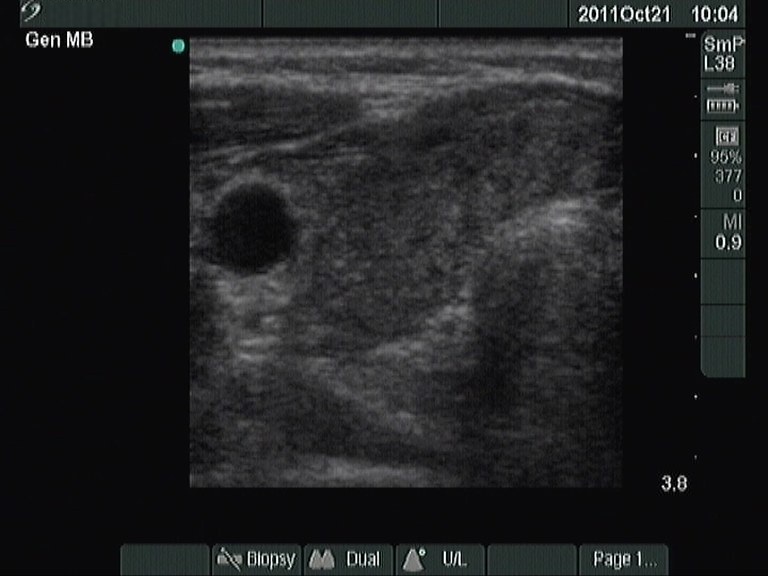
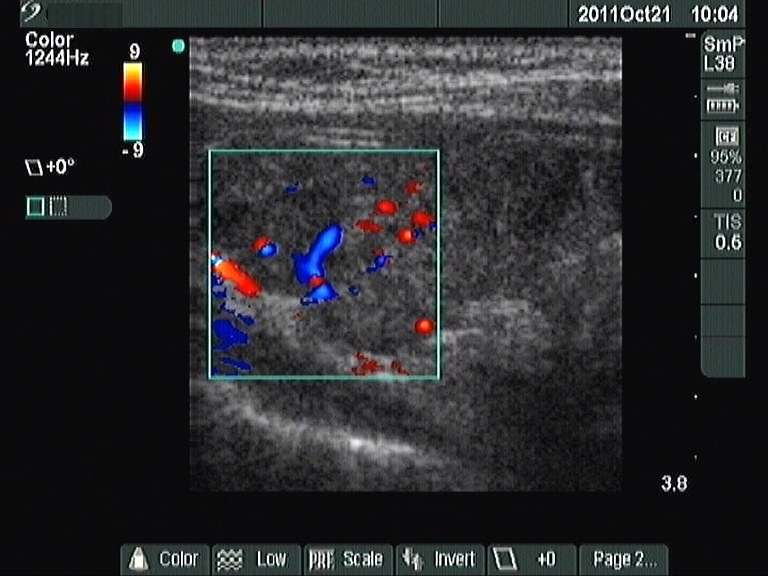
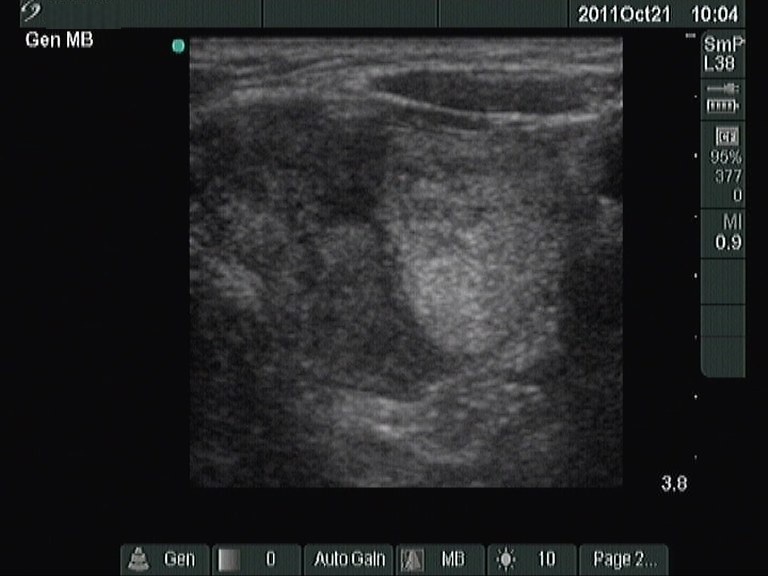
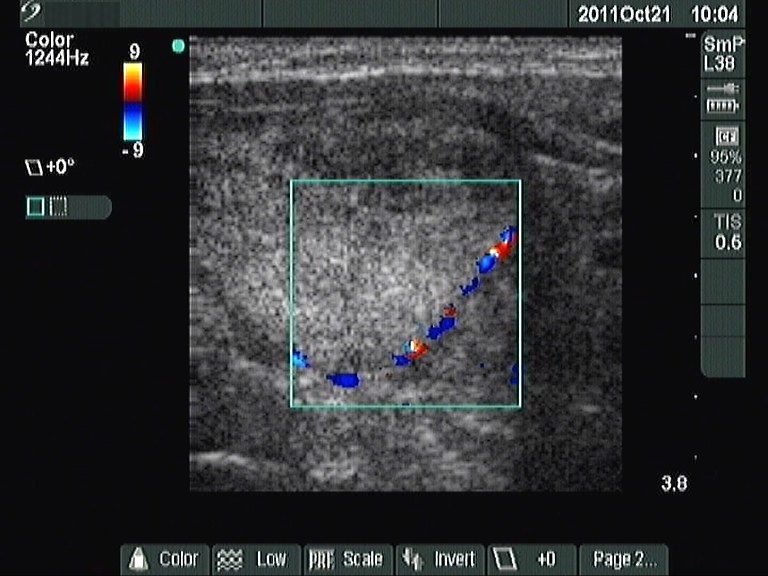

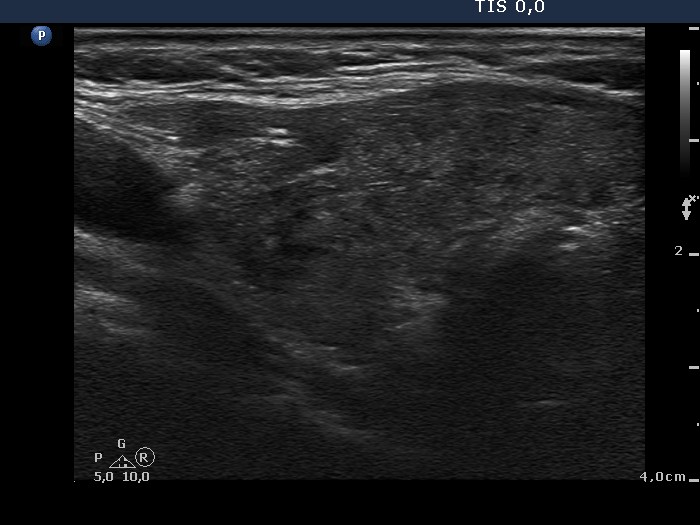
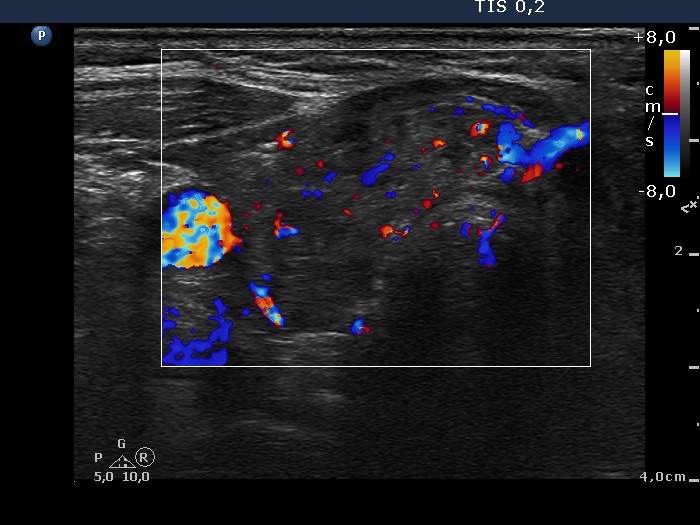
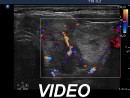
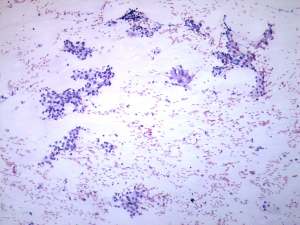
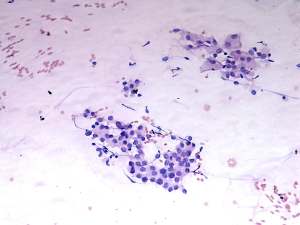
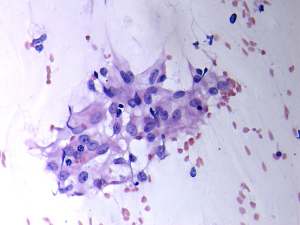
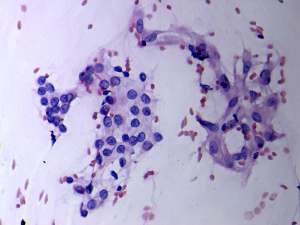
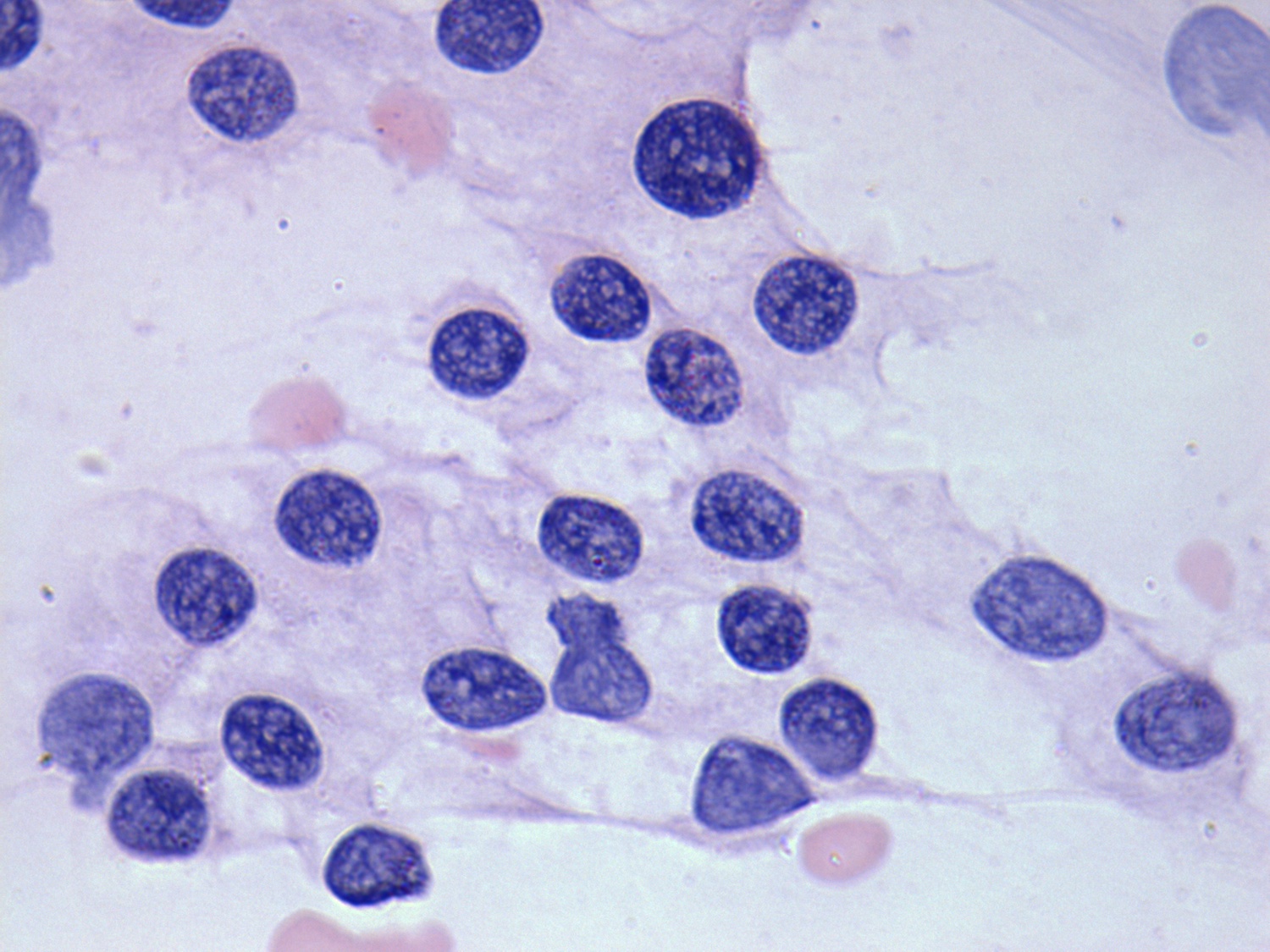
First examination (first two rows of images)
Clinical data: A 63-year-old woman came to a yearly follow-up examination because of a known thyroid nodule and a hypothyroidism replaced with daily 75 microgram levothyroxine. She had neck discomfort while turning her head to the right.
Palpation: There was a nodule in the left lobe.
Hormonal investigation indicated euthyroidism with TSH-level 1.01 mIU/L on daily 75 microgram levothyroxine.
Ultrasonography revealed hypoechogenic inhomogeneous thyroid. There was a hyperechogenic nodule in the left lobe. The nodule presented a halo sign and perinodular blood flow. It increased in size, therefore we performed aspiration cytology.Cytology: benign lesion.
X-ray examination excluded tracheal compression and disclosed neck rib. We offered rheumatological examination.
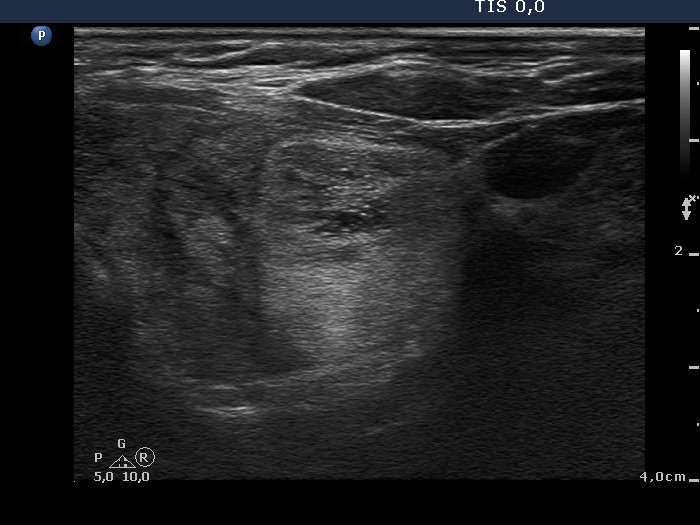
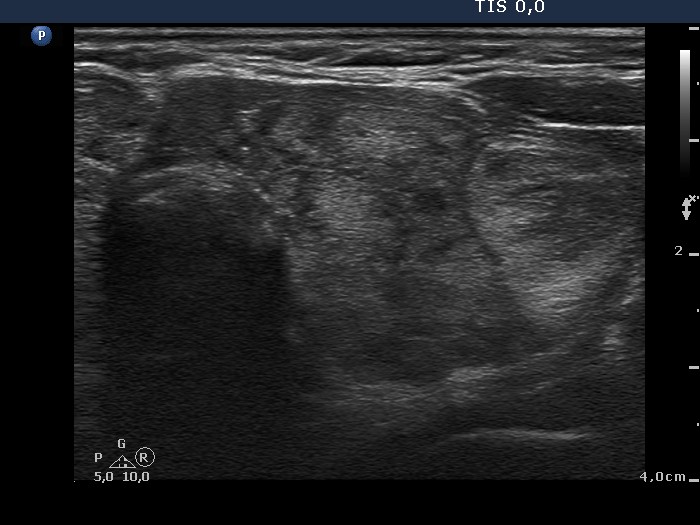
Second examination two years later (third row of images)
Clinical data: The complaints of the patient have worsened and she requested a repeat examination.
Palpation: unchanged.
Hormonal investigation indicated euthyroidism on daily 87.5 microgram levothyroxine (TSH-level 1.88 mIU/L).
Ultrasonography was unchanged except for the increase of the left lobe by 38% in volume.Cytology: benign lesion.
The patient was operated on because of compression signs.
Histopathology disclosed Hashimoto's thyroiditis and multiple hyperplastic nodules in the left lobe.
Comments.
-
It is worth comparing the numerous small echonormal lesions and the large nodule in the left thyroid. The formers are part of the so-called pseudonodular form of Hashimoto's thyroiditis, while the true nodule was much larger. Pseudonodules are usually in the range of 5 to 15 mm in maximal diameter.
-
This patient had a rare compression sign. We suppose that the nodule comprised a nerve while the patient turned her head to the right. This complaint was resolved after the surgery.
-
Most solitary nodules which are greater than 2 cm in maximal diameter and display a halo sign and perinodular blood flow are follicular tumor. This case belongs to the relatively rare exceptions.


