
|
|
Subacute granulomatous de Quervain's thyroiditis - Case 37. |
 |





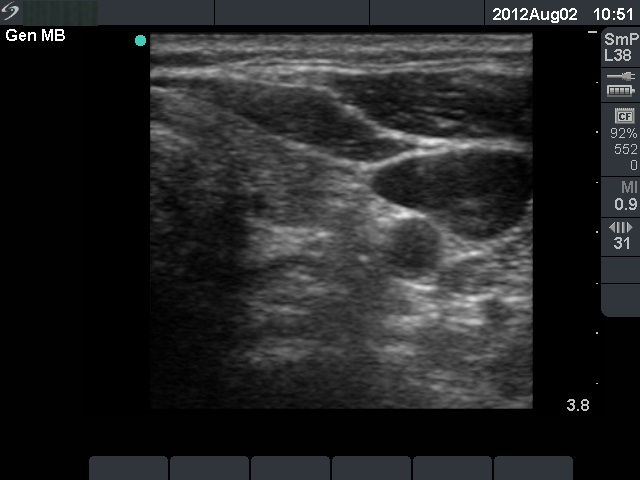
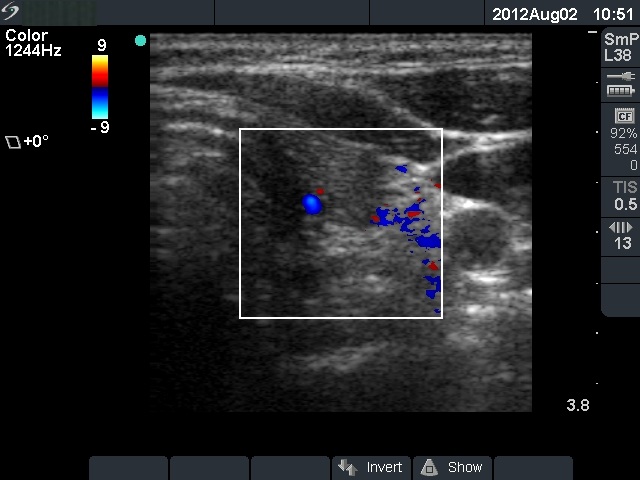



Initial examination (first row):
Clinical presentation: a 63-year-old man was referred with typical complaints of subacute thyroiditis. The fever and initial pain localized to the right thyroid spontaneously stopped within 2 weeks. There were no complaints in the next 5 days. Thereafter, 2 days before the present investigation the fever recurred and the left thyroid became painful.
Palpation: the left thyroid was hard and painful, while the right thyroid was moderately firm and not tender.
Functional state: moderate degree of hyperthyroidism with TSH-level 0.001 mIU/L, FT4 39.7 pM/L. ESR and CRP were elevated, 64 mm/H and 13.9 mg/l, respectively.
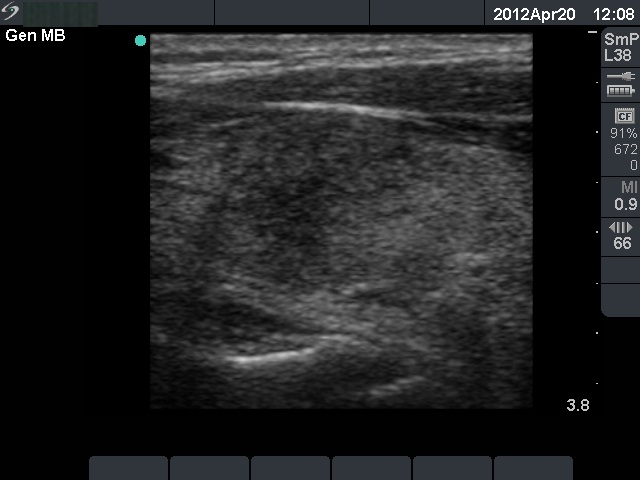
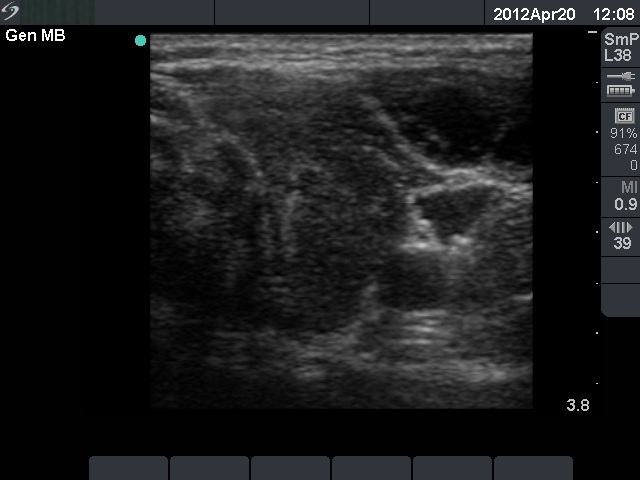
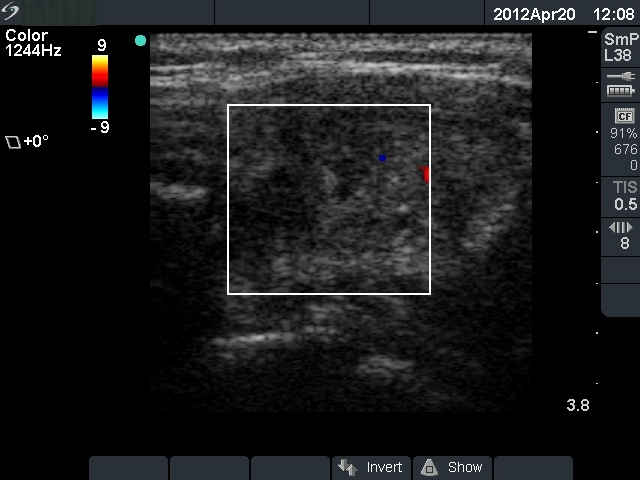
Ultrasonography: there was a hypoechogenic lesion with ill-defined borders in the right lobe, while the entire left lobe was hypoechogenic. The vascularization was almost absent in the entire thyroid.
Cytological diagnosis: subacute, granulomatous de Quervain's thyroiditis.
Suggestion: steroid therapy. The inflammatory complaints of the patient suddenly stopped within 24 hours of the steroid intake.
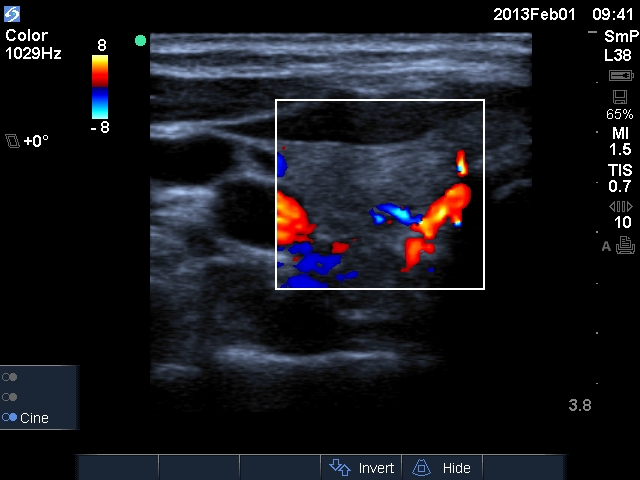
Follow-up examination 4 months after initial investigation (second row)
Clinical presentation: the only complaints of the patient were fatigue and 3 kg gain in weight.
Palpation: no abnormality.
Functional state: subclinical hypothyroidism with TSH-level 7.92 mIU/L, FT4 10.7 pM/L. ESR was 9 mm/H while CRP 4.0 mg/L.
Ultrasonography: there were small hypoechogenic lesions in both lobes. The vascularization was decreased but detectable. The thyroid decreased in size.
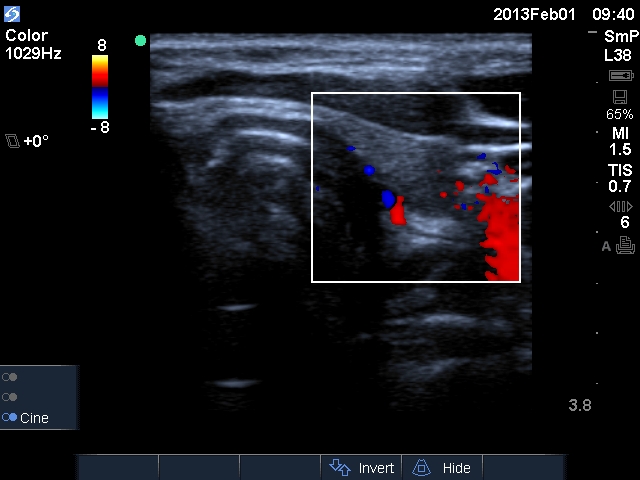
Follow-up examination 10 months after initial investigation (third row)
Clinical presentation: the patient had no complaints.
Palpation: no abnormality.
Functional state: euthyroidism with TSH-level 3.02 mIU/L, FT4 14.6 pM/L. ESR was 6 mm/H, while CRP 0.4 mg/L.
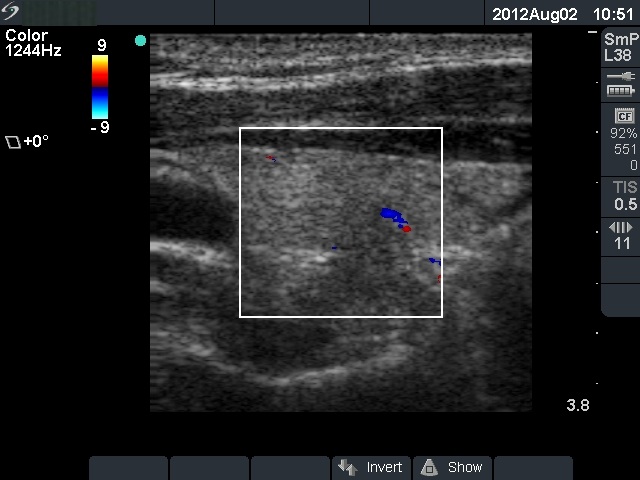
Ultrasonography: the size of hypoechogenic areas has decreased further and the vascularization became almost normal.


