|
|||||||||||||
|
Differential diagnostic problems: hyperthyoidism. Table 1
|
|||||||||||||
|
|||||||||||||
|
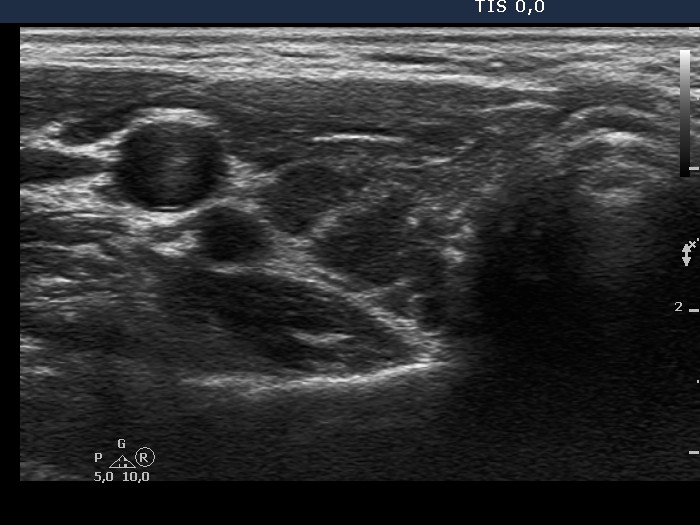
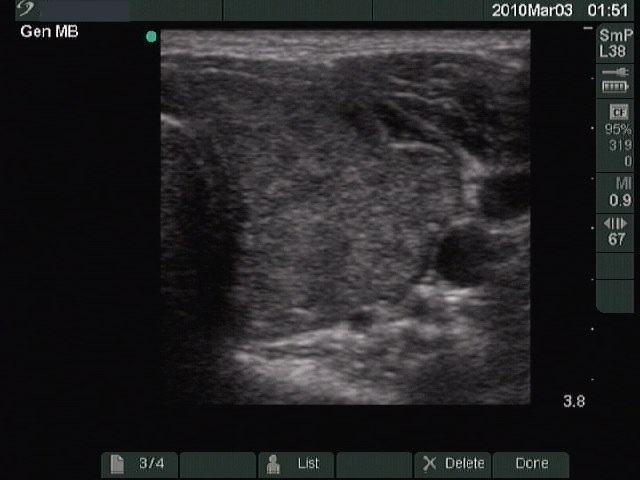
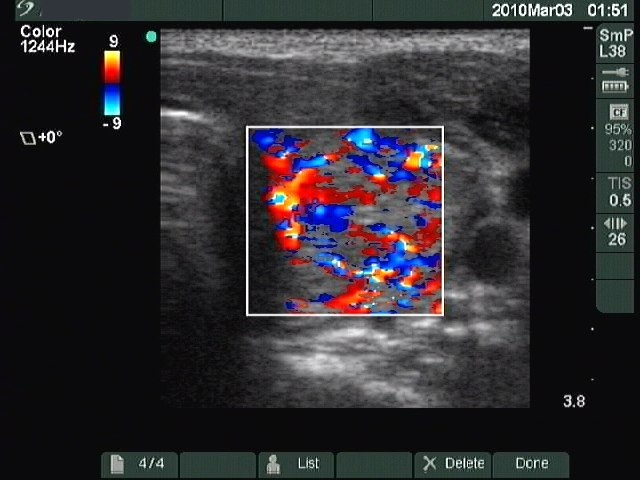
Compare the two
series of pictures. Two important differences can be observed:
Hashimoto's case presents fibrotic changes and the thyroid is more
vascularized in Graves' disease compared with Hashimoto's
thyroiditis.
We should see the importance of the sonographic distinction in the everyday practice. A patient with a moderate degree of hyperthyroidism without thyroid associated orbitopathy is referred for evaluation. The differential diagnostic problem is whether the elevated FT4-level is caused by active hormone production or thyroiditis. We indicate TSH-receptor antibody test (TsAb). If it is elevated, we will diagnose Graves' disease and administer thyrostatic drugs. If TsAB is normal, we will diagnose hashitoxicosis and give the most symptomatic treatment. If we are lucky, we will receive the result of TsAb within one day but not immediately. But we do not need more time if we perform ultrasound right there and see the pattern demonstrated in the right pictures, therefore we can start with the adequate thyrostatic therapy at once and not one week or weeks later or conversely we can decide not to give thyrostatic faced with a pattern demonstrated in the left images. |
|||||||||||||