
|
|
Graves' disease - Case 29.
|

|


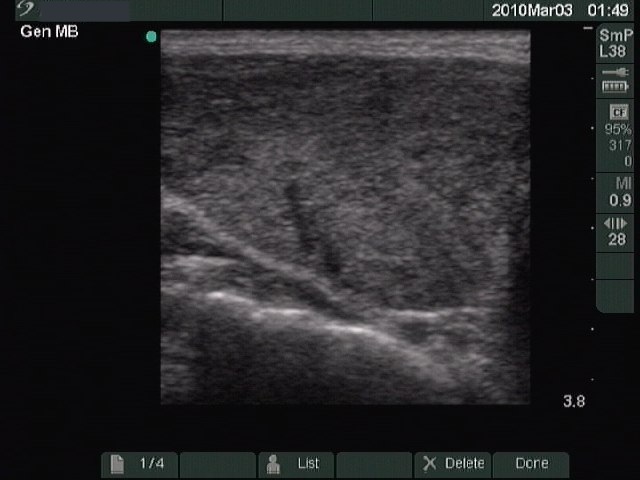
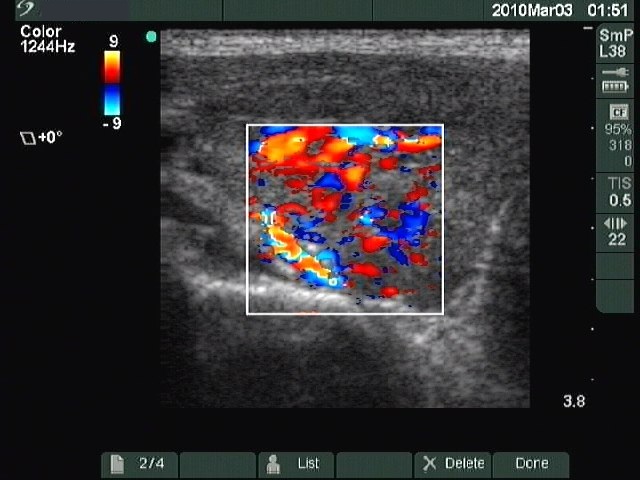
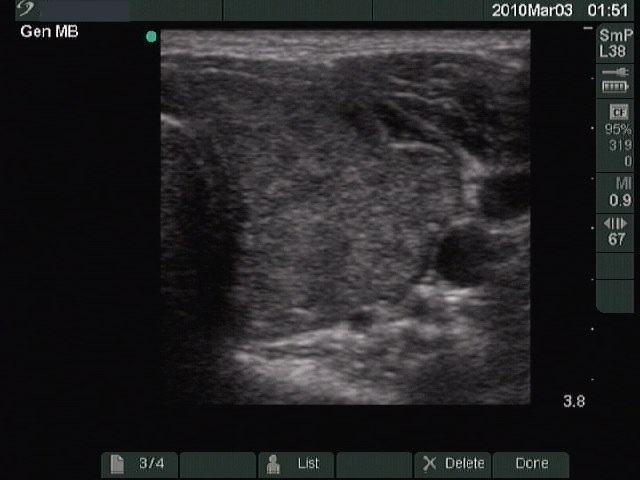
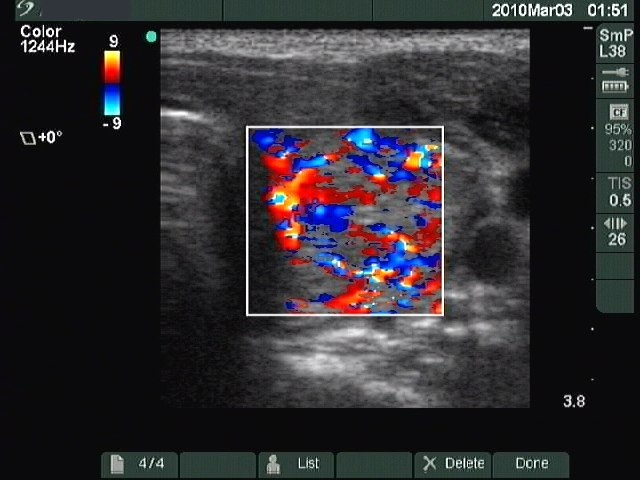

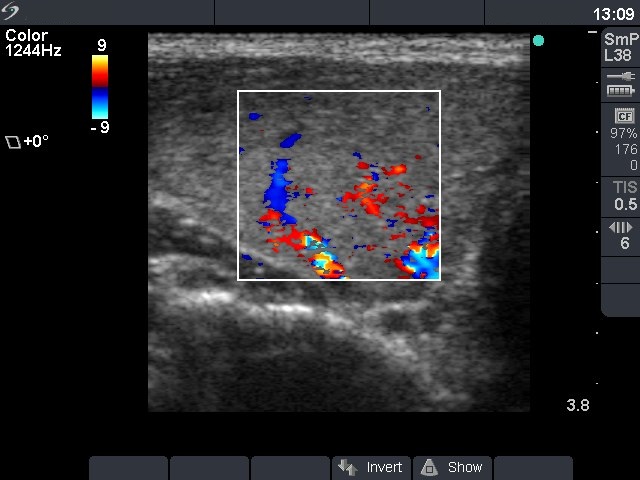
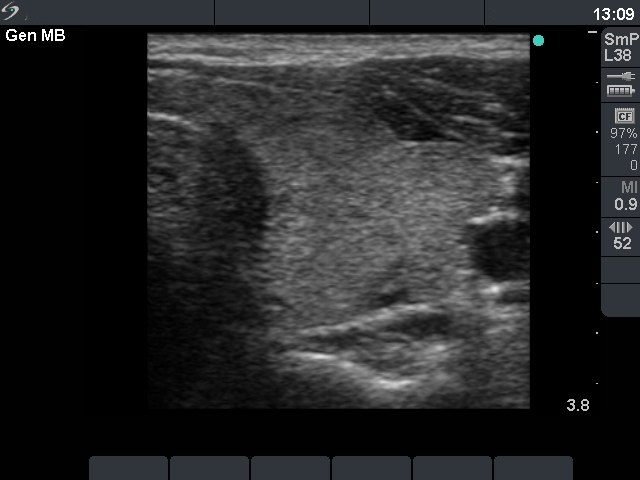
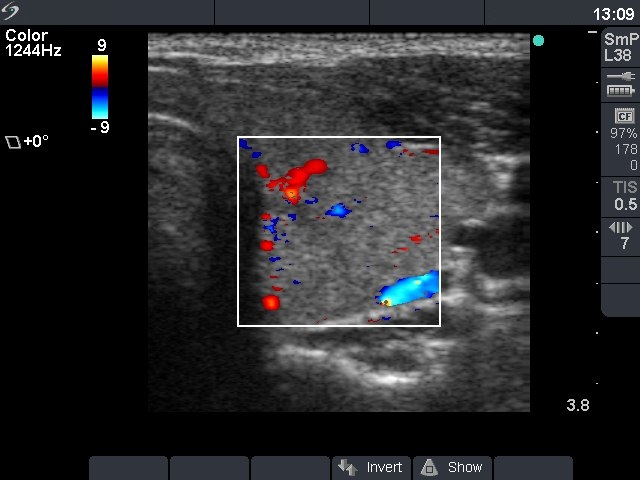
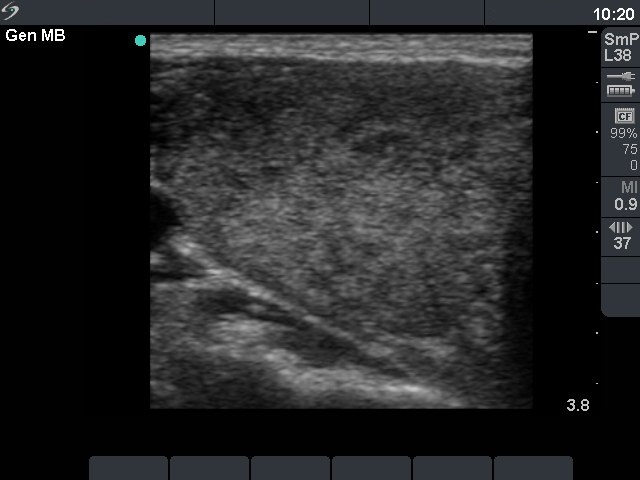
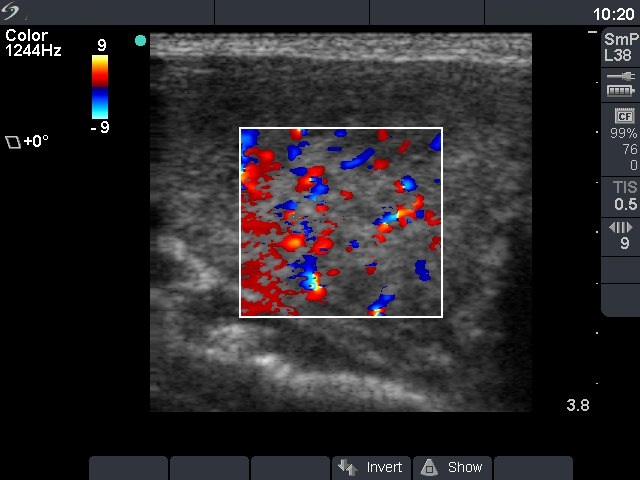
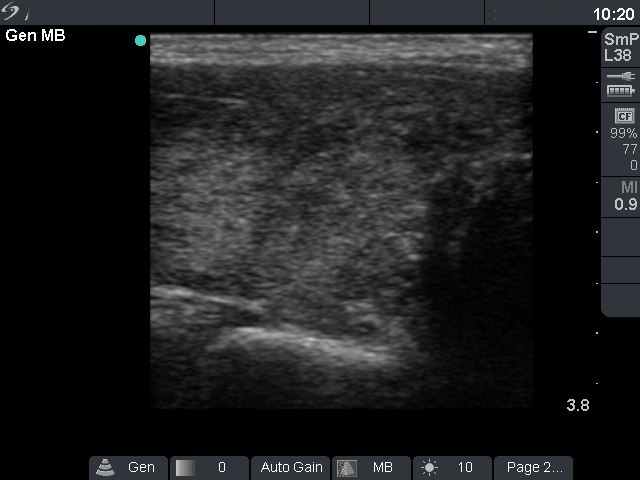
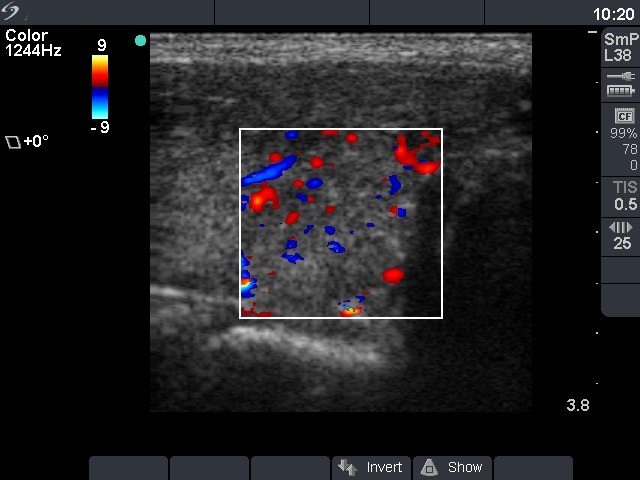
First examination (first row):
Clinical presentation: a 41-year-old woman was referred for an evaluation of typical complaints suggesting hyperthyroidism.
Palpation: no abnormality.
Functional state: hyperthyroidism with TSH 0.001 mIU/L, FT4 41.9 pM/L.
Ultrasonography: the thyroid was moderately hypoechogenic without any nodule. The vascularization was increased.Clinical diagnosis: hyperthyroidism caused by Graves-Basedow's disease.
We administered daily 20 mg methimazole to the patient.
Second examination one year later (second row):
Clinical presentation: the patient was treated with hyperthyroidism for a year. She had no complaints.
Palpation: no abnormality.
Functional state: euthyroidism on daily 10 mg methimazole and 50 microgram levothyroxine with TSH-level 2.08 mIU/L, FT4 13.9 pM/L.
Ultrasonography: the echo structure and the vascularization of the thyroid had normalized.
The methimazole was discontinued.
Third examination two years after the first (third row):
Clinical presentation: the patient was well till the previous month. Then she lost 2 kg in weight, fatigue, nervousness developed.
Palpation: no abnormality.
Functional state: hyperthyroidism with TSH-level 0.01 mIU/L, FT4 49.9 pM/L, TSH-receptor antibody test positive.
Ultrasonography: the thyroid became minimally hypoechogenic, and the vascularization was increased again.
Suggestion: daily 20 mg methimazole and radioiodine therapy.


