
|
|
The role of complex diagnosis - other examples - Case 3.
|

|


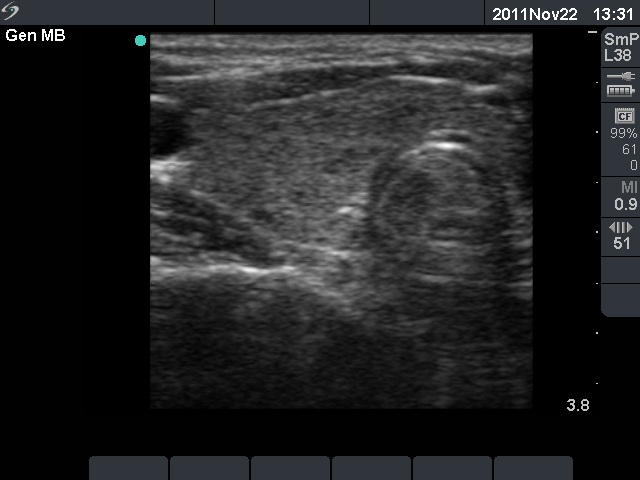
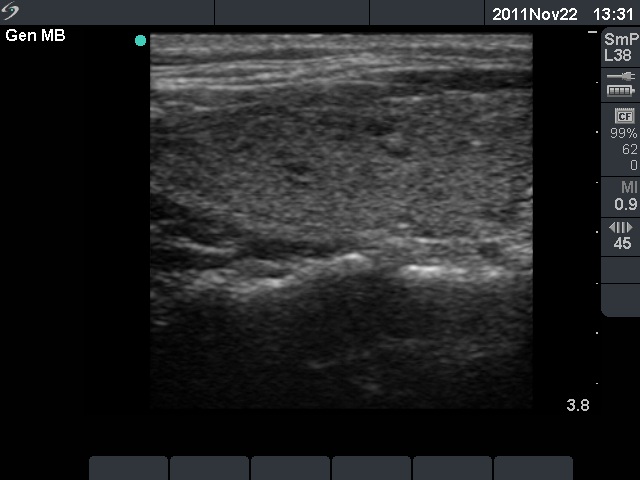
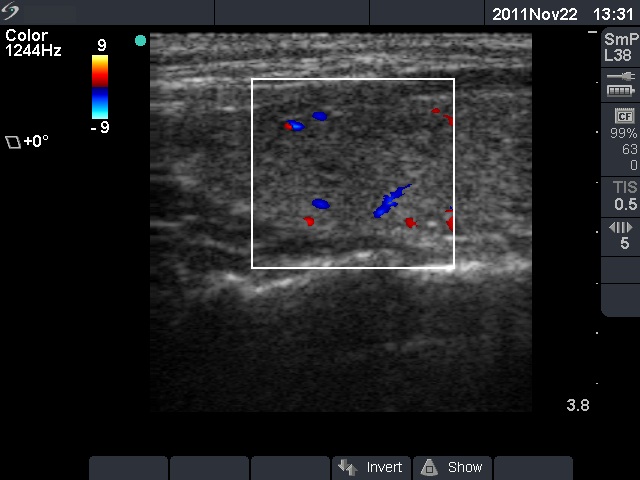
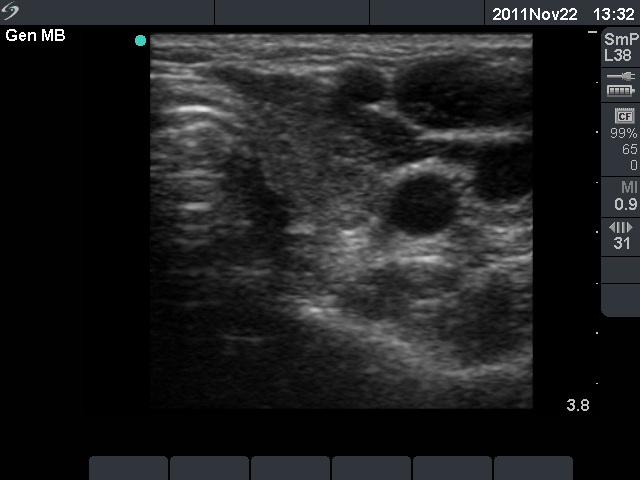
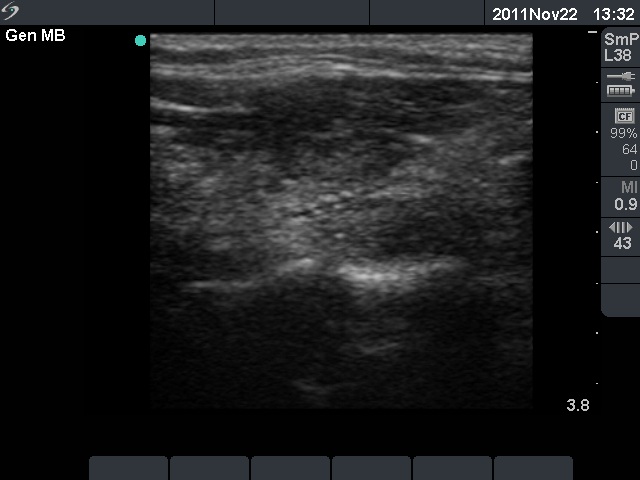
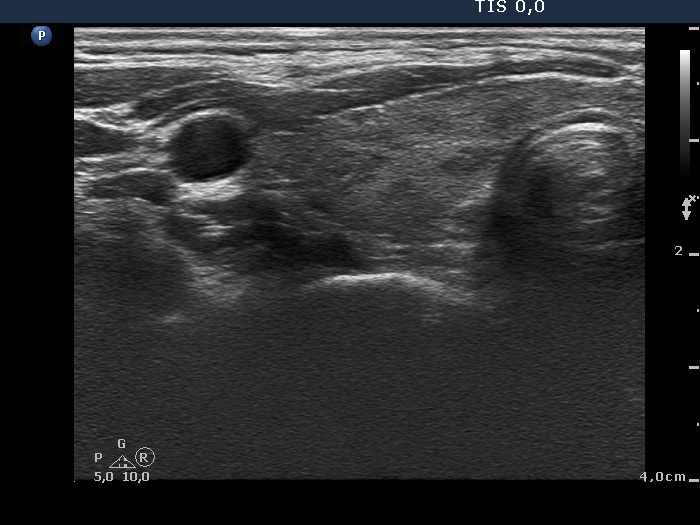
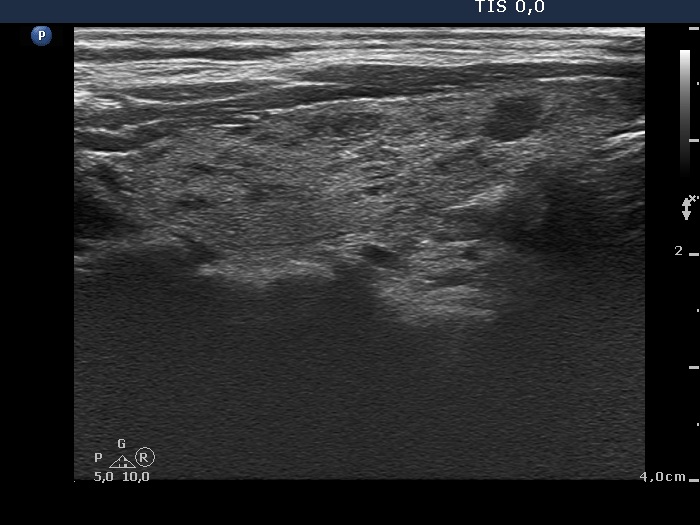
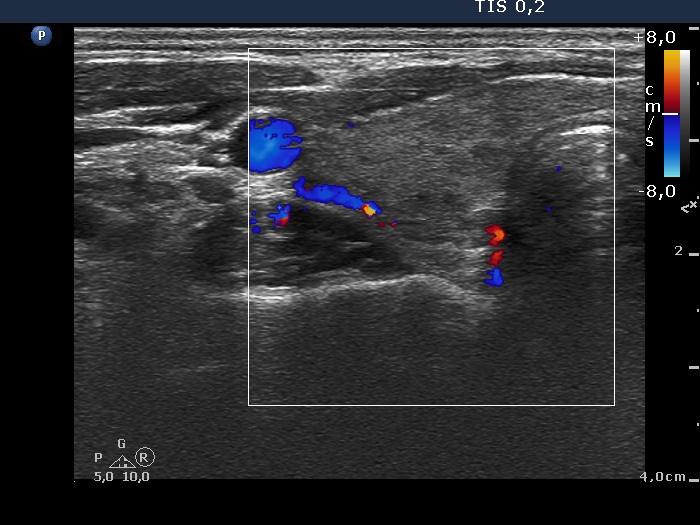
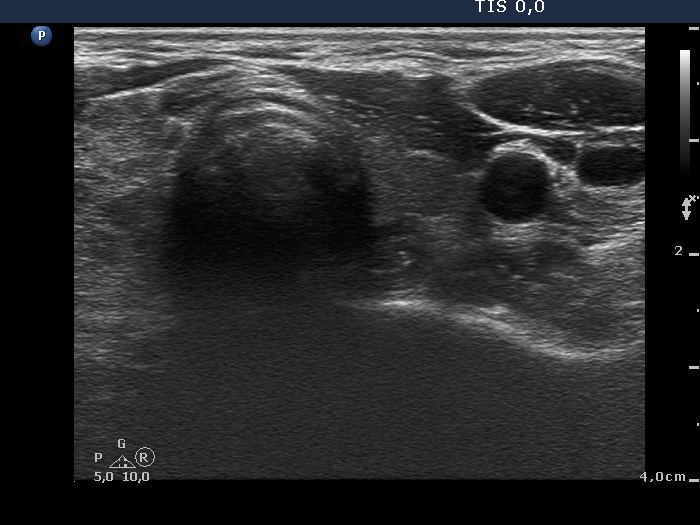
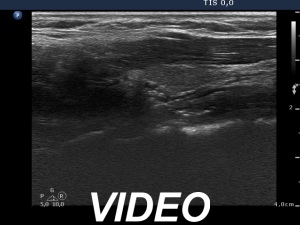
First examination (first row of images)
Clinical presentation: a 27-year old woman was investigated because of headache. The GP initiated including others a thyroid examination. The patient had no complaints suggestion thyroid disorder.
Palpation: no abnormality.
Hormonal examination: indicated euthyroidism (TSH 1.68 mIU/L).
Ultrasonography: the right thyroid was echonormal and presented small punctate hypoechogenic areas while the left lobe was minimally hypoechogenic. The echogenicity index was around 5%.
An anti-TPO test resulted in normal value (1 U/mL) as did anti-hTg (0 U/mL).
We suggested TSH determination every two years, in the event of pregnancy at once.
Second examination 17 months later (second row of images)
Clinical presentation: the patient visited us because she became pregnant. She was on 5th week of pregnancy and except for nausea had no complaints.
Palpation: no abnormality.
Ultrasonography: compared with the previous investigation the hypoechogenic areas increased in size. The echogenicity index was around 15%.
Hormonal examination: subclinical hypothyroidism (TSH 4.07 mIU/L, FT4 13.8 pM/L). Compared with the previous examination anti-TPO became higher (71 U/mL) but was already in the normal range.
Daily 50 microgram levo-tiroxin was administered. The TSH was checked 6 weeks later and resulted in 0.84 mIU/L. Thereafter 3 months later was a repeat TSH-determination (7.08 mIU/L) when the dose of levothyroxine was increased to 75 microgram. Two weeks after delivery the replacement therapy was stopped. Now, 2 years later the patient is euthyroid.
Comments.
-
There is a continuous debate in the literature as to whether a patient with a high normal TSH has to be treated or not, i.e. when the TSH is between 2.5 mIU/L and the upper normal value. I do not discuss here this issue. My practice is the described elsewhere. The pivotal feature is the demonstration of an underlying autoimmune thyroiditis.
-
On my experience, ultrasound is more sensitive than anti-TPO in the detection of mild degree of autoimmune thyroiditis. This case study supports this opinion.
-
It is worth to compare this case study with the previous one.


