
|
|
The operated thyroid - Case 22.A patient after bilateral near total thyroidectomy
|

|


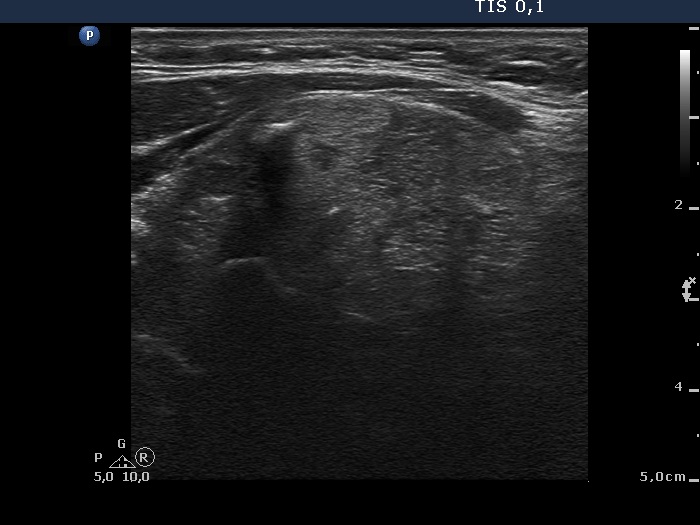
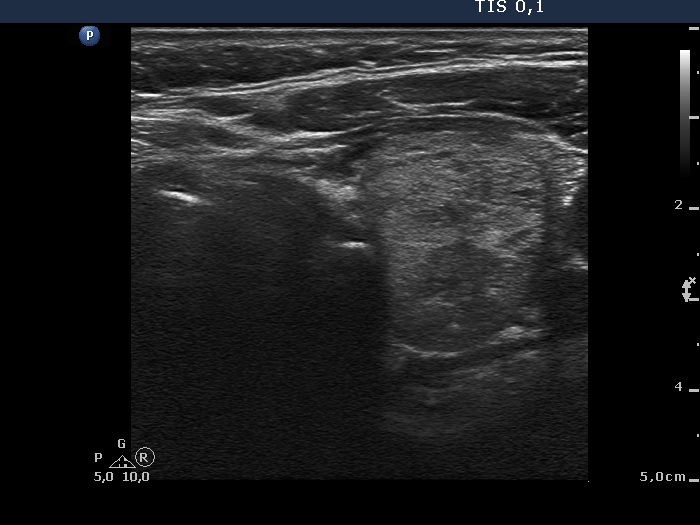


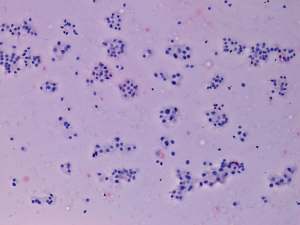

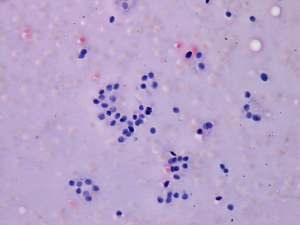



First examination - before surgery (first and second rows of images)
Clinical data: a 53-year-old woman was referred for evaluation of a multinodular goiter known for decades. The patient noticed a slow but progressive increase in her thyroid size. In the last 6 months her voice became deeper.
Palpation: both thyroids were enlarged and multiple nodules were palpable in both lobes.
Result of blood tests: euthyroidism (TSH 1.34 mIU/L).
Ultrasonography: the thyroids were composed of multiple nodules with different echogenicity. There was no nodule with a suspicious pattern.Aspiration cytology was performed from a hypoechogenic nodule in the right thyroid and resulted in benign, colloid goiter.
Bilateral near total thyroidectomy was performed. Histopathology disclosed benign hyperplastic nodular goiter.
15 months after surgery (third row of images)
Clinical data: the patient had no complaints.
Palpation: no abnormality.
Result of blood tests: euthyroidism on daily 150 microgram levo-tiroxine (TSH 0.90 mIU/L).
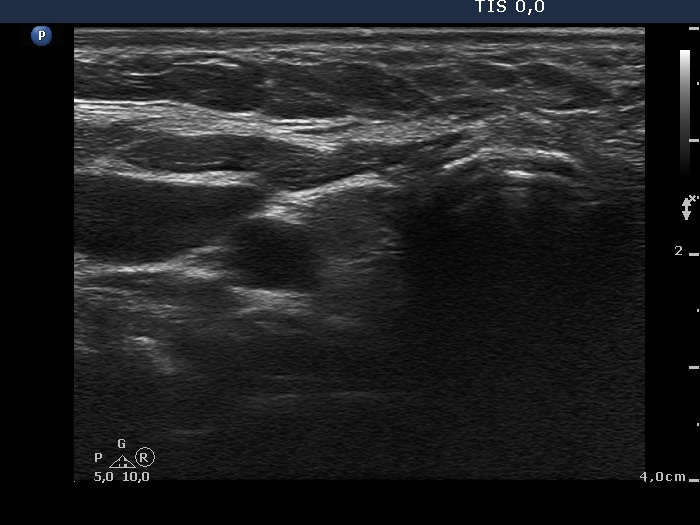
Ultrasonography: small hypoechogenic remnants of the thyroid parenchyma was found in both thyroid beds. The remnants were surrounded by echonormal rims. The latter corresponded the connective tissue.
Comments.
-
It is essential to give the diameters of the thyroid lobes in the event of a large multinodular goiter. In such cases it is very difficult or even impossible to measure the individual nodules exactly and reproducible. On the other hand, the question whether to operate or not to operate the patient depends on the size of the whole thyroid and not on the size of the individual nodules.
-
The echo pattern of the near or subtotally resected thyroid has a very specific pattern: the remnant is moderately hypoechogenic and is surrounded with an echonormal rim of connective tissue. This pattern mimics that of a nodule.


