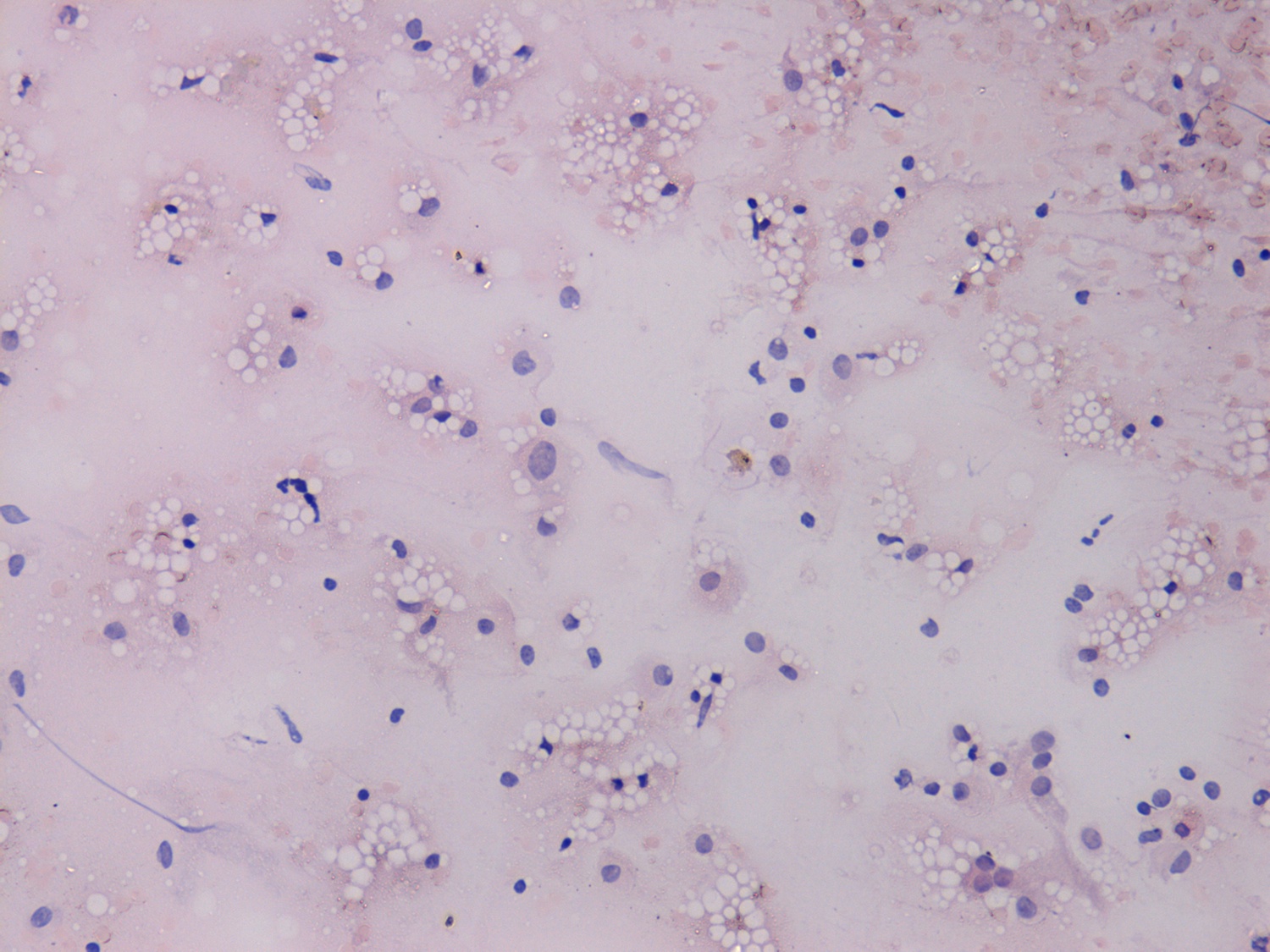
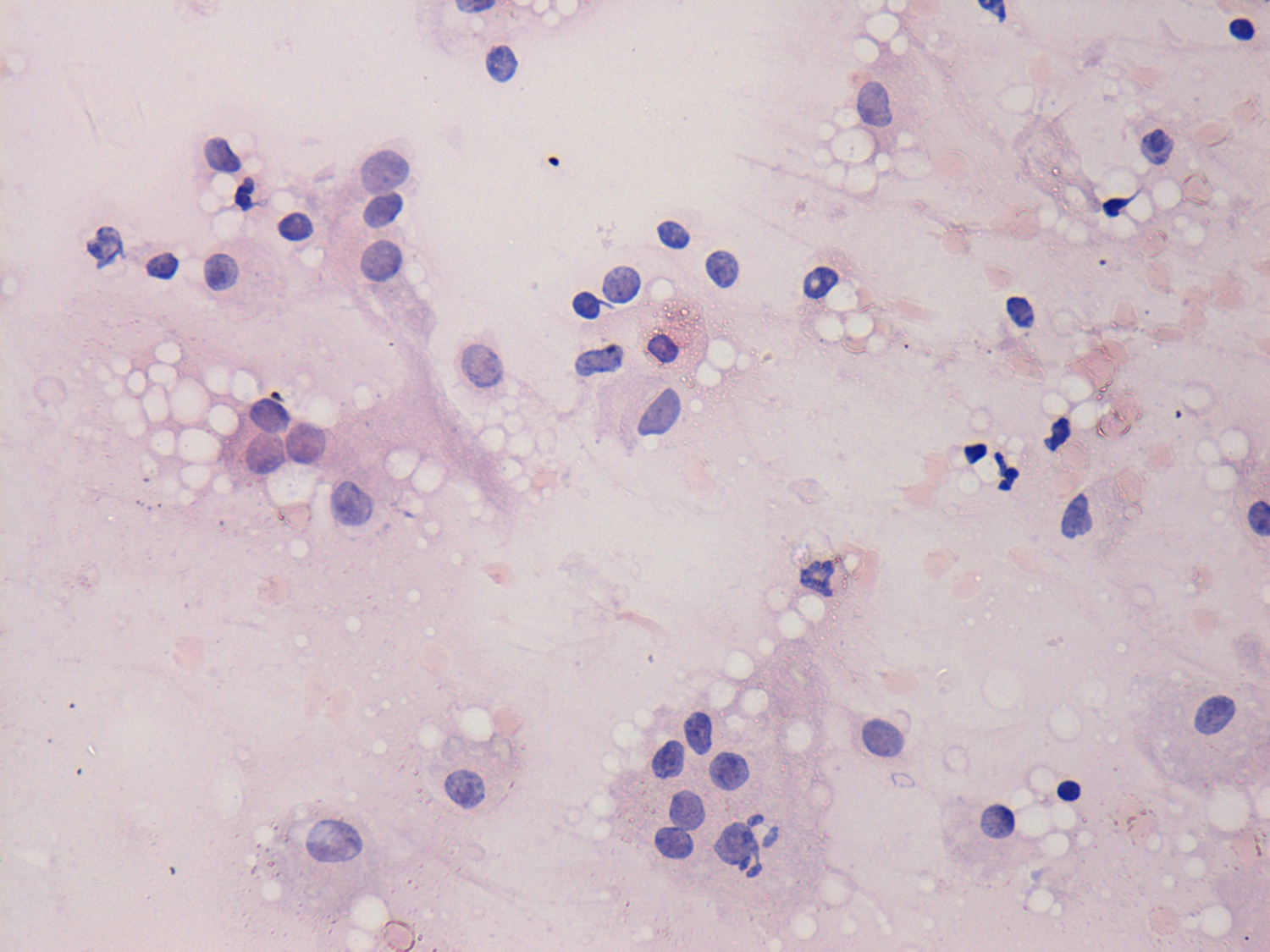
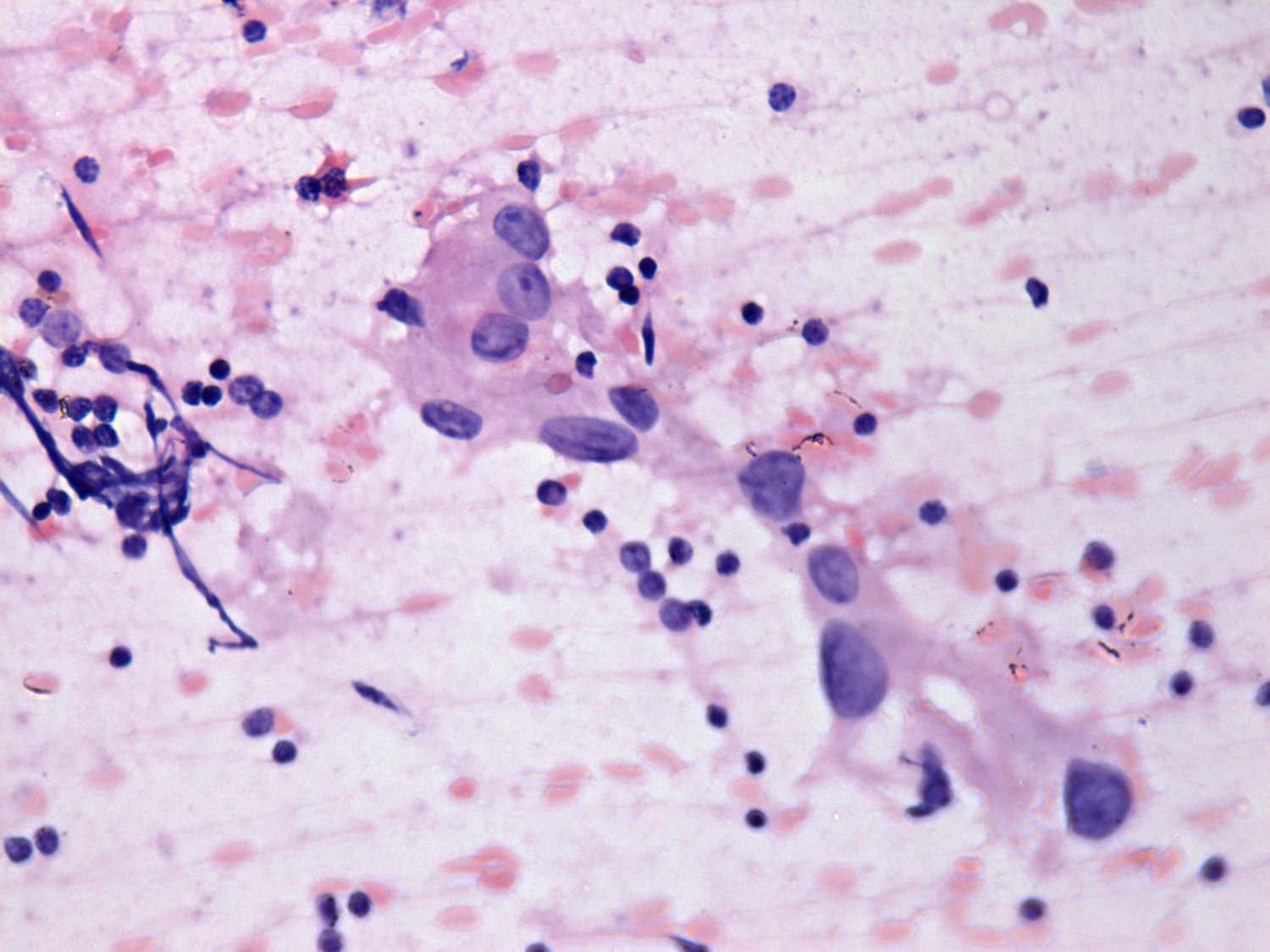
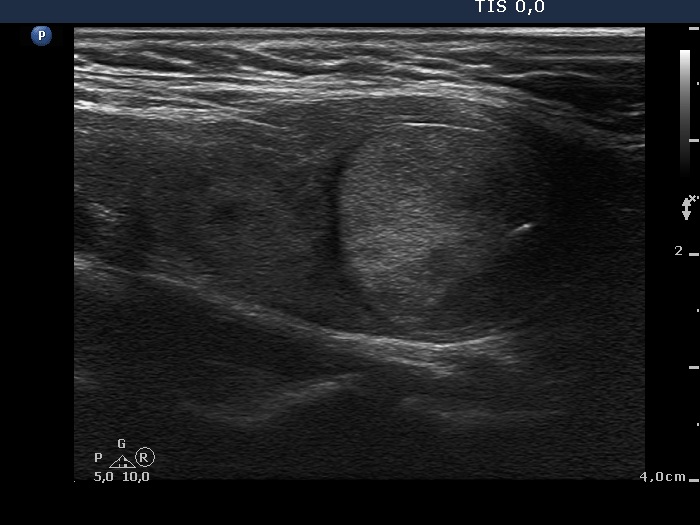
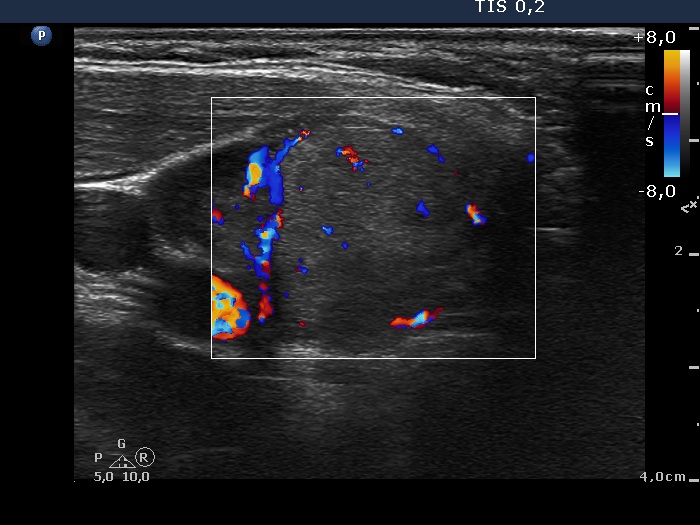
There is little doubt that these patients have Hashimoto's thyroiditis because of the presence of heterogeneous lymphoid elements. Neither the ratio dissociated cells to cells in monolayered sheets nor a significant atypia has relevance in such cases. The finding of grooves in the left case has limited significance, too. It is very hard to say on these cytological pattern more than the patients have Hashimoto's thyroiditis.
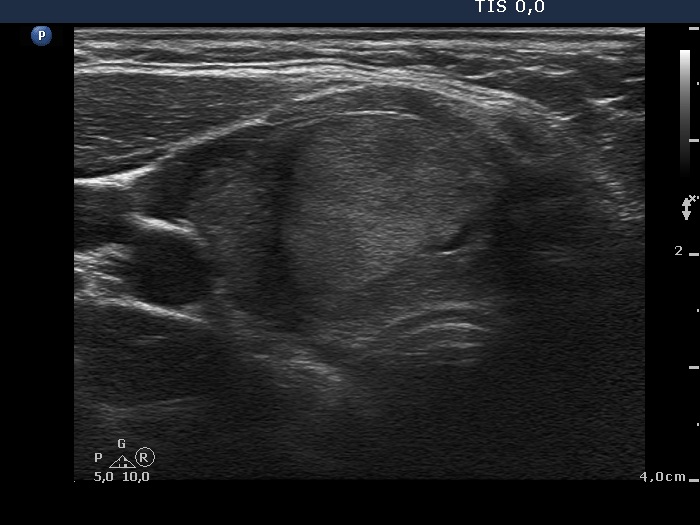
There are subtle differences in the ultrasound presentations. There are two hyperechogenic lesions in the left case which presents an irregular shape. Such lesions may correspond to the so-called pseudonodules. On the other hand the likelihood of a follicular type tumor is high in the event of the regularly geometrical, solitary hypoechogenic nodule presenting halo and a type 2 vascular pattern demonstrated in the left case.
Taking all these into account, the risk of a tumor is high in the left while very low in the left case.